

Finding the right coronary artery disease diet can feel overwhelming, especially with so much conflicting advice out there. As a cardiology dietitian with over 15 years of experience, I’ve seen this work firsthand. A personalized, science-based coronary artery disease diet is one of the most powerful tools you have. I want to share a story that shows exactly what’s possible.
A 44 year old man came to see me after his third heart attack and sixth stent placement. He’d already changed his diet multiple times on his own. He couldn’t figure out what was still driving his cardiovascular complications. After his heart attack, his doctor said to come back in 3 months for another stent placement because there was too much inflammation to place it at that time.
We worked together to add therapeutic, cardioprotective foods that could optimize his blood vessel health, calm inflammation, and optimize all his cardiometabolic metrics to truly halt plaque formation. After 3 months, he went back for the procedure and he left without a stent, his doctor said he no longer needed one. His diet that now became his lifestyle made him have more energy than he experienced in years and it helped him address all aspects of atherosclerosis that was driving plaque formation, seen in his advanced lab testings and imaging results.
His results show exactly what’s possible with nutrient adequacy. In this blog, I’ll walk you through how science-based nutrition can make a meaningful difference for CAD.
What is Coronary Artery Disease?
To understand how diet can help, it’s useful to know what coronary artery disease actually is.
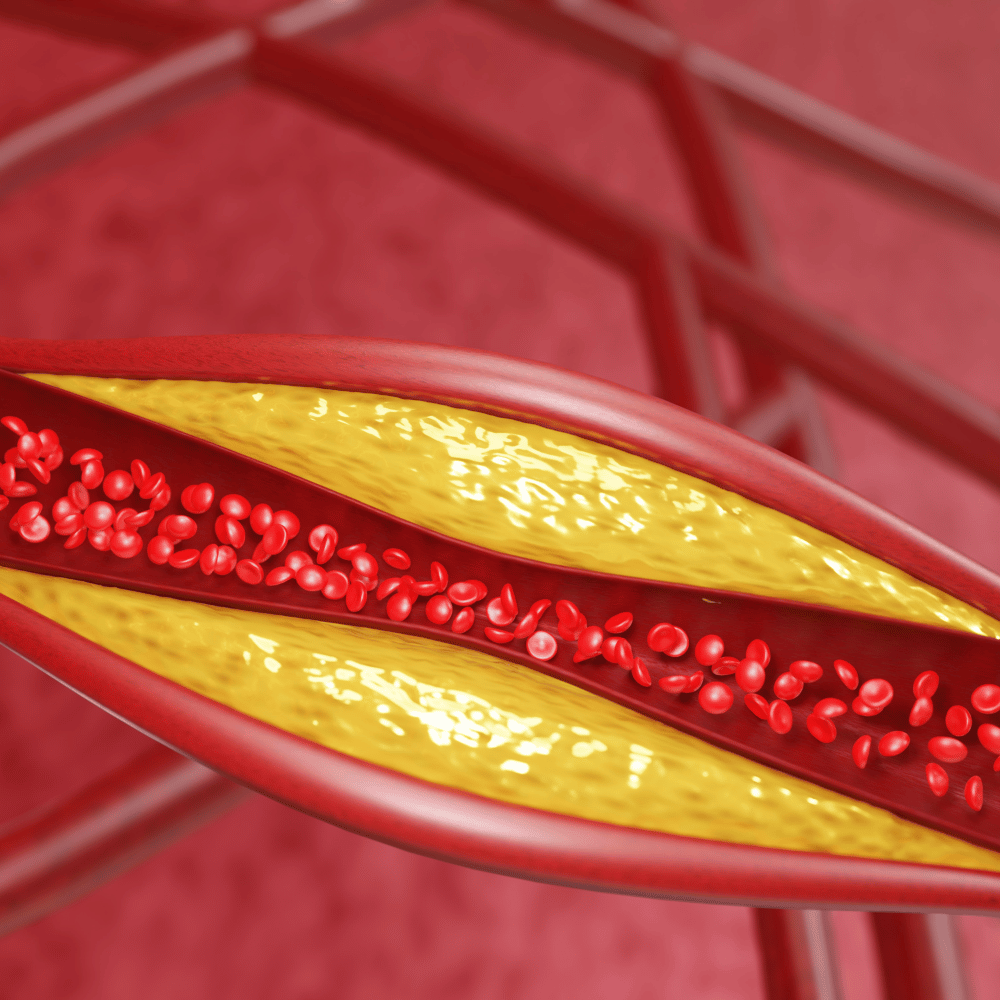
Coronary artery disease (CAD) develops when plaque builds up inside the coronary arteries. These arteries supply blood to your heart muscle.
This plaque is made up of cholesterol, fat, and other substances. It builds up along the artery wall after an injury there.
As plaque accumulates, it narrows the artery and restricts blood flow to your heart. When the blockage reaches about 70%, you may notice angina (chest pain or pressure) during physical activity. Blockages nearing 90% can cause chest pain even at rest.
Plaque can also rupture. When this happens, your body forms a blood clot at the site. That clot can partially or fully block the artery. This is what triggers a heart attack.
Heart disease remains the leading cause of death in the United States, and coronary artery disease is the most common form.
Here’s what makes this so important: atherosclerosis, the process that drives CAD, isn’t fixed. Diet, lifestyle, and targeted nutrition can directly influence how much plaque builds up and whether it continues to progress.
How Does Diet Affect Coronary Artery Disease?
The food you eat directly shapes the drivers of coronary artery disease. Here’s how:
- Inflammation: Chronic inflammation speeds up plaque formation and damages your vessels. Rather than focusing only on what to avoid, focus on getting adequate anti-inflammatory nutrients. That’s what actually calms this response.
- Blood sugar and insulin sensitivity: Elevated blood sugar damages the arterial lining and accelerates atherosclerosis. Diet plays a major role in helping your cells respond better to insulin. This helps you avoid the high insulin surges that can damage your arteries over time. This is week 2.
- Oxidative stress: Oxidative stress damages your arteries and speeds up plaque buildup. Specific foods, and even how you cook them, can help protect your body’s natural antioxidant defenses. We dive into this in week 3.
- Blood pressure: Blood pressure is influenced by many different pathways, from nitric oxide to sodium and potassium transporters in your cells. Getting adequate amounts of key nutrients through food, and supporting your gut health, helps keep these pathways working properly. This is part of week 4, better blood flow.
- Endothelial function: Specific nutrients support nitric oxide bioavailability, which helps your blood vessels relax and maintain healthy blood flow. This matters even if your blood pressure reads normal. This is also covered in week 4.
- Cholesterol and lipid levels: Diet influences LDL cholesterol, ApoB particle number, and non-HDL cholesterol (a marker of cholesterol content, not a direct particle count like ApoB). These particles are the literal material plaque is made of. But the full picture goes deeper than high or low numbers alone. We optimize this in week 5.
A targeted, science based coronary artery disease diet can address all six of these drivers at once. These six drivers align closely with what we cover week by week inside Optimize, my 6-week live group program. If you want a deeper, structured understanding of exactly how to support your heart through nutrition, Optimize walks you through each of these pathways in order, with guidance and support along the way.
What to Eat: The Core Building Blocks
Most of my clients come to me already eating a general healthy diet. They’ve cut out processed foods, added more vegetables, and followed general heart-healthy guidelines. Yet their labs still show inflammation, elevated ApoB, or oxidative stress. That’s because a general healthy diet isn’t the same as one specific to vascular health.
Here’s what actually drives results:
- Nutrient adequacy, not restriction: Consistently meeting your body’s needs for the nutrients that support blood vessel health, calm inflammation, and help stabilize plaque.
- Targeted amounts, based on your labs: Two people with coronary artery disease can need very different amounts of nutrients such as magnesium, potassium, or omega-3s. It depends on their individual drivers of disease, not a one-size-fits-all list.
- Pairings and timing matter, too: It’s not just which foods you eat. How you pair them and when you eat them both affect how well your body can use these nutrients.
- Context changes the target: Fatty fish provides omega-3s that help lower inflammation, but your ideal amount depends on your omega-3 index and your triglyceride levels. Leafy greens provide magnesium and nitrates that support nitric oxide bioavailability, but your optimal intake depends on your levels, gut health, plaque severity, and kidney function.
This is why generic “eat more vegetables” advice falls short. A cardiac dietitian can tailor your exact amounts and quantities to you. If you want this fully personalized, working 1:1 lets you pinpoint the therapeutic amounts your specific body needs.
Can Diet Actually Reverse Coronary Artery Disease?
Diet can actually reverse coronary artery disease to some degree, especially soft plaque, the kind that hasn’t hardened yet. This soft plaque is also more susceptible to rupture, one of the main causes of heart attacks.
In the DISCO-CT trial, 89 people with non-obstructive coronary artery disease got optimal medical therapy for about a year. Half also received 1:1 nutrition counseling sessions with a registered dietitian, working through a science-based eating plan tailored to their labs and health history.
Using CT angiography, researchers tracked vulnerable, or soft, plaque. The dietitian-guided group saw it shrink by about 53 mm³, versus 21 mm³ with medical therapy alone, roughly two and a half times more regression.
Total plaque volume didn’t differ significantly between groups. The benefit showed up specifically in soft, high-risk plaque, the kind most closely tied to future heart attacks.
This is why I don’t see nutrition as separate from medical care. The combination, not medication or diet alone, is what moves the needle for coronary artery disease. I’ve worked in this space for over 15 years, and I’m still blown away every time I see my patients’ plaque regression on imaging after they add in targeted, science-based nutrition.
After a Stent or Bypass: What Changes
A stent or bypass treats the blockage in front of you. It doesn’t address the disease process that caused it.
After a stent or bypass, your treatment goals shift to secondary prevention. The goal becomes protecting against another cardiac event, not just managing symptoms. Your recurrence risk is also much higher now, which makes taking action even more important.
Your lab targets usually get stricter, too. Current guidelines call for more aggressive treatment once LDL stays at or above 70 mg/dL. The same applies once non-HDL stays at or above 100 mg/dL. The same stricter approach applies to ApoB, the particle count tied most closely to plaque buildup. Many cardiologists and dietitians aim even lower than these numbers.
- Lower LDL cholesterol, non-HDL cholesterol, and ApoB targets than before your procedure
- Getting adequate amounts of anti-inflammatory nutrients, since inflammation continues to drive new plaque formation
- Getting adequate amounts of nutrients that support insulin sensitivity and stable blood sugar, both tied to future cardiac risk
Your nutrition needs change, too. The right foods, amounts, and pairings depend on your current labs, medications, and recovery stage. This isn’t a generic post-cardiac diet handout. If you’re looking for more support, I’m happy to help.
FAQs
How does diet cause coronary heart disease?
Diet causes coronary heart disease through a multistage process, not just one pathway. It starts with atherogenic LDL and ApoB particles building up in your artery walls. From there, inflammation, oxidative stress, and insulin resistance all add fuel to the fire. Nutrient deficiencies and endothelial dysfunction make it even harder for your body to protect itself. Targeted nutrition can address every one of these stages. That’s exactly what we dive into inside Optimize, my 6-week live group program that walks you through each stage week by week, with lectures, Q&A, and ongoing support along the way.
What foods are good for coronary artery disease?
Good foods for coronary heart disease matter, but how you eat them matters just as much. Most people already know fatty fish, leafy greens, legumes, and healthy fats support heart health. The real question is whether you’re getting them in the right amounts, pairings, and timing for you.
This is the gap between “eating healthy” and targeted nutrition. Nutrient adequacy, consistently meeting your body’s actual needs, is what moves your labs and protects your blood vessels. Generic food lists can’t account for your current inflammation, cholesterol levels, or medications. A personalized plan, built around your specific numbers, your medical history, your food preferences, your activity level, your medication and supplement list, is what makes these foods actually work for you to protect your heart and vascular health.
Are eggs bad for coronary artery disease?
Eggs aren’t automatically bad for coronary artery disease. The answer depends on how your body handles dietary cholesterol. Research suggests about 30% of people are high cholesterol absorbers, meaning their body absorbs more cholesterol from food than average.
For these individuals, eggs and other cholesterol-rich foods can raise LDL and ApoB more significantly.
Is banana good for coronary artery disease?
Bananas can be a good addition to a coronary artery disease diet. They’re rich in potassium, which helps regulate blood pressure. Lower blood pressure eases strain on your heart and blood vessels over time.
Though if you’re on a potassium-sparing diuretic or have kidney disease, your potassium needs may look different. It’s worth checking your individual targets with your care team before relying on bananas for blood pressure support.
Is keto diet good for coronary artery disease?
I don’t categorize diets as good or bad for coronary artery disease, including keto. I never put two clients on the exact same plan, even when they share a diagnosis. My Indian clients keep their traditional foods on the table. I tailor those foods to meet their nutrient needs and support their vascular health. If someone thrives on a lower-carb approach, it only works if it also supports their gut health. And that depends entirely on what they’re actually eating. The name “keto” can’t tell us that. What protects your heart is making sure your actual nutrient needs are met, whatever you call the way you’re eating.
Meet the Author

Michelle Routhenstein, MS, RD, CDE is a Cardiology Dietitian and Preventive Cardiology Nutritionist with over 14 years of experience helping people take control of their heart health. She graduated cum laude from New York University with both a Bachelor of Science and Master of Science in Nutrition and Dietetics, and has worked in clinical settings including a level-one trauma hospital in NYC.
As the owner of Entirely Nourished, Michelle has helped thousands of individuals lower their blood pressure and cholesterol, reduce their risk of heart attacks and strokes, and in many cases reduce or eliminate heart medications entirely through her science-based, personalized approach to nutrition. She specializes in helping women understand and address the deeper drivers of cardiovascular risk, including those that surface during and after pregnancy.
If you’re ready to take a proactive approach to your heart health, you can work with Michelle through individual nutrition counseling or inside her 6-week group program, Optimize, designed to give you clarity, confidence, and real results.
References
- Shahjehan RD, Sharma S, Dababneh E, et al. Coronary Artery Disease. [Updated 2024 Oct 9]. In: StatPearls [Internet]. Treasure Island (FL): StatPearls Publishing; 2024 Jan-. Available from: https://www.ncbi.nlm.nih.gov/books/NBK564304/
- National Heart, Lung, and Blood Institute. (2024, December 27). What is coronary heart disease? National Institutes of Health. https://www.nhlbi.nih.gov/health/coronary-heart-disease
- J Henzel, M Makarewicz-Wujec, L Wardziak, P Trochimiuk, M Kruk, C Kepka, Z Dzielinska, M Demkow, Dietary Intervention to Stop COronary Atherosclerosis in Computed Tomography (DISCO-CT), NCT02571803 , High-risk plaque regression after intensive dietary intervention in patients with non-obstructive coronary artery disease: a randomised computed tomography angiography study (DISCO-CT), European Heart Journal, Volume 41, Issue Supplement_2, November 2020, ehaa946.0185, https://doi.org/10.1093/ehjci/ehaa946.0185
- Feldman, D. I., Michos, E. D., Stone, N. J., Gluckman, T. J., Cainzos-Achirica, M., Virani, S. S., & Blumenthal, R. S. (2020). Same evidence, varying viewpoints: Three questions illustrating important differences between United States and European cholesterol guideline recommendations. American journal of preventive cardiology, 4, 100117. https://doi.org/10.1016/j.ajpc.2020.100117
- Öörni, K., Äikäs, L., Ruuth, M., Tigistu-Sahle, F., Käkelä, R., Wester, I., Gylling, H., & Simonen, P. (2026). High cholesterol absorption efficiency enhances proatherogenic properties of low-density lipoprotein particles. Journal of internal medicine, 299(6), 711–725. https://doi.org/10.1111/joim.70085