

Oxidative stress symptoms don’t always show up on your standard blood panel. One of my clients had completely normal LDL cholesterol, yet her arterial plaque kept progressing. We tested her myeloperoxidase (MPO), a key oxidative stress marker. Her level came back at 760pg/mL, well above a healthy range.
We built a science based targeted nutrition plan around her labs, medical history, and lifestyle. Within six months, her MPO dropped to 170pg/mL. Within 18 months her soft plaque regressed and her hard plaque stabilized (verified by a Cleerly plaque analysis). Her case shows something important: oxidative stress symptoms can silently drive heart disease, even when cholesterol numbers look normal. If you’ve been told your labs are fine, but something still feels off, this could be playing a role.
In this article, we’ll cover what oxidative stress is, its causes, and how it’s diagnosed. We’ll also look at its link to heart disease and how to reduce oxidative stress symptoms naturally.
What Is Oxidative Stress?
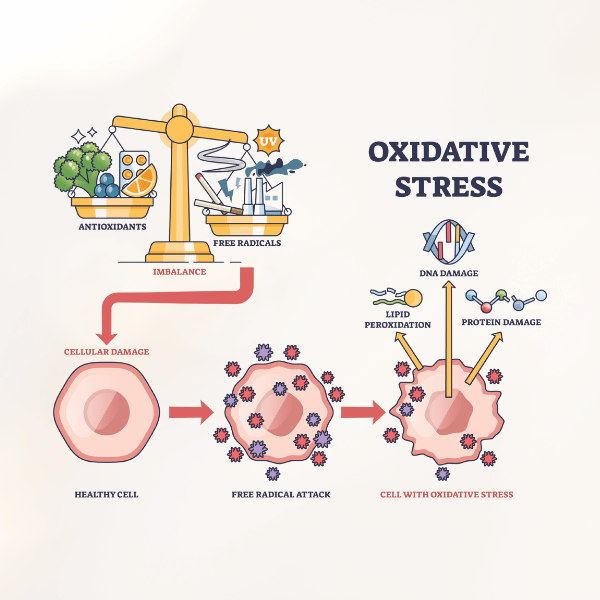
Oxidative stress happens when free radicals build up in your body faster than you can clear them.
Free radicals form during normal cellular processes such as energy production, and in small amounts, they’re actually useful. They help your immune system fight off invading germs.
The problems begin when free radical production surpasses your antioxidant defenses. Antioxidants neutralize your free radicals and keep the system balanced.
When the system gets out of balance, free radicals cause oxidative damage at the cellular level by reacting with proteins, lipids, and DNA.
Research shows this cellular damage plays a role in chronic inflammation. It also contributes to conditions like cardiovascular disease, cancer, and neurodegenerative diseases.
Your body has natural defenses against this process. Daily food choices can support and strengthen these antioxidant systems. Identifying what’s driving your oxidative stress symptoms is the first step toward addressing them.
What Are the Symptoms of Oxidative Stress?
Oxidative stress rarely announces itself early on. Most of the damage happens at the cellular level. This shows up in lab markers long before you’d notice anything change day to day. Still, research points to a few symptoms of oxidative stress worth knowing.
- Persistent fatigue: A clinical study on unexplained chronic fatigue found people with this fatigue had significantly higher oxidative stress markers and lower antioxidant activity than healthy people.
- Visible skin aging: A study imaging human facial skin found oxidative stress levels directly correlated with wrinkle severity, especially around the eyes.
- Brain fog: A study on long COVID patients found people with higher oxidative stress markers were more likely to report brain fog.
- Memory lapses and difficulty concentrating: Research on the brain shows oxidative stress can affect the hippocampus, the brain region tied to memory formation.
- Mood changes: The same research links oxidative damage in the amygdala to shifts in emotional regulation.
- Age-related decline in strength and stamina: One review discusses oxidative damage as a leading theory behind age-related functional decline, including reduced muscle strength.
- Joint pain and inflammation: Research on rheumatoid arthritis shows free radicals at the site of joint inflammation contribute to both the onset and progression of the disease.
- Symptoms tied to underlying conditions: Because oxidative stress underlies so many chronic conditions, its symptoms often look like whatever condition it’s contributing to. If you’re already managing heart, joint, or neurological symptoms, oxidative stress may be part of the picture.
Because this damage happens quietly at the cellular level, you might not notice any of these symptoms, and that’s exactly why targeted lab work matters. If you want to go deeper into cardiovascular labs that look at the whole picture, my Know Your Numbers: Heart Labs Explained course is a great place to start.
What Causes Oxidative Stress?
Oxidative stress builds when free radical production outpaces your body’s antioxidant defenses. Several everyday factors can tip that balance:
- Cigarette smoke and alcohol use
- Environmental pollutants and heavy metal exposure
- Certain medications and chemical solvents
- Charred or heavily processed foods, including smoked meats and reused cooking oils
- Radiation exposure, including excessive sun exposure
- Chronic infection, illness, or unmanaged inflammation
- Excessive exercise without targeted and adequate nutrition and recovery
- Poor sleep or ongoing sleep deprivation
- Unbalanced nutrition or nutrient deficiencies, especially in antioxidant-supporting nutrients
- Ongoing mental or emotional stress
Some of these causes come from outside your body. Others build up internally through normal metabolism, immune activity, and aging. Either way, the more your body handles at once, the harder your antioxidant systems have to work to keep up.
Cardiovascular Disease and Oxidative Stress
Oxidative stress is an active driver of how heart disease develops and progresses. Free radicals interact directly with the arteries in ways that build plaque.
Here’s how it works: excess free radicals oxidize LDL particles in your bloodstream. Research shows this oxidized LDL draws macrophages into the arterial wall, where they become foam cells. That process is what forms atherosclerotic plaque in the first place.
Not all plaque behaves the same way, though. Soft plaque, the more unstable, rupture-prone kind, often responds well to targeted nutrition, while hard, calcified plaque develops over decades of accumulated risk. You can read more about that distinction in What Causes Plaque in Arteries?
A few markers show oxidative damage happening in real time:
- Oxidized LDL (oxLDL): LDL cholesterol that’s been altered by free radicals, making it far more likely to trigger plaque formation than unoxidized LDL.
- Myeloperoxidase (MPO): Released by immune cells at sites of arterial inflammation, MPO drives further oxidation and can destabilize existing plaque. Elevated MPO has been linked to a higher risk of cardiovascular events.
- Homocysteine: Research shows elevated homocysteine causes oxidative stress and endothelial dysfunction, impairing nitric oxide bioavailability and straining your arteries.
These markers do respond to targeted nutrition. Identifying which specific trigger, or combination of triggers, like nutrient inadequacies, insulin resistance, or nitric oxide bioavailability, is driving your labs makes it possible to build a strategy to optimize them.
Food comes first in that process. Supplements can fit into a personalized plan, but they’re not meant to be stacked collectively without reason. Poor-quality supplements, especially those made with oxidized oils or rancid ingredients, can actually add to oxidative stress rather than reduce it. Supplements should be chosen intentionally, based on your labs, intake, and medical history, to make sure they’re helping rather than causing harm.
This is exactly where personalized care makes the difference. Inside my 1-on-1 counseling or Optimize group program, we spend an entire week digging into oxidative stress specifically, walking through how to mitigate it at each pathway, from nutrient gaps to inflammation to lifestyle triggers, based on what’s actually driving it for you.
How Is Oxidative Stress Diagnosed?
There’s no single standard test for oxidative stress, and it’s not something every provider is familiar with. Specialized markers like MPO, oxidized LDL, 8-oxo-dG, and malondialdehyde exist, but they’re not part of routine bloodwork, and many providers don’t request them unless they know to ask.
Because these markers vary by condition and lab, testing works best alongside a full picture of your labs, symptoms, and health history rather than as a standalone diagnosis.
How to Reduce Oxidative Stress Symptoms
Reducing oxidative stress isn’t about chasing a trending superfood or taking a bunch of supplements. It starts with identifying what’s actually driving the imbalance in your body, whether that’s nutrient gaps, chronic inflammation, or unmanaged stress, and addressing each piece with targeted, science-based nutrition.
The nutrients your body uses to fight oxidative stress, vitamin C, vitamin E, glutathione, and polyphenols found in foods like green tea, work differently depending on what’s actually depleted or imbalanced for you. That’s why two people with the same symptoms can need very different nutrition strategies.
This is where lab work and health history come into play to create a personalized, science-based plan. If you’d like additional support putting this into practice, I’m happy to help. I’ve worked with thousands of people with cardiovascular disease to build targeted, personalized nutrition plans that are sustainable and help stabilize plaque and protect their heart for the long term. Inside my Optimize group program, we dedicate an entire week to oxidative stress specifically, walking through exactly how to mitigate it by targeting each pathway involved. You can also work with me directly through 1-on-1 counseling.
FAQs: Oxidative Stress Symptoms
How do I know I have oxidative stress?
You typically know you have oxidative stress through lab markers rather than symptoms alone, since most of the damage happens at the cellular level before you’d notice anything. Blood tests can measure markers like MPO, oxidized LDL, or 8-oxo-dG to get a clearer picture. If you’re already dealing with fatigue, brain fog, or a chronic condition like heart disease, oxidative stress could be part of what’s going on. Testing alongside a full review of your labs and health history gives the most accurate answer.
How do you fix oxidative stress?
You fix oxidative stress by identifying what’s actually driving it. Root causes can include nutrient gaps, chronic inflammation, environmental exposures, or unmanaged stress, and each one needs a different nutrition approach. This isn’t generic advice, either. I’ve seen well-meaning dietitians give clients the wrong guidance on oxidative stress, missing the specific triggers involved or recommending a one-size-fits-all supplement routine. Working with a cardiovascular dietitian who understands these pathways lets you build a plan targeted to your specific triggers.
What are the best antioxidants for reducing oxidative stress?
Reducing oxidative stress isn’t just about increasing antioxidant intake. Antioxidants like vitamin C, vitamin E, glutathione, and polyphenols help neutralize free radicals, but if the underlying triggers, like chronic inflammation, poor sleep, or unmanaged stress, are still active, they’re fighting an uphill battle. Real progress comes from identifying what’s driving the imbalance in the first place and pairing that with the right nutrients for your specific labs and needs.
What are some examples of oxidative stress in humans?
Common examples of oxidative stress in humans include smoking-related lung damage, sun-induced skin aging, and the arterial plaque buildup seen in cardiovascular disease. It also shows up less visibly, like elevated MPO or oxidized LDL on a lab panel, or the cellular changes linked to chronic fatigue, often silently causing damage well before any symptoms appear. That’s exactly why getting ahead of it matters. Addressing oxidative stress before it progresses is far more effective than waiting for symptoms to show up.
Does stress cause oxidative stress?
Yes, stress can cause oxidative stress by increasing free radical production and straining your body’s antioxidant defenses over time. Research on chronic stress links it directly to markers of oxidative damage, since the body’s stress response demands more energy and oxygen. Stress also tends to disrupt sleep and nutrition choices, which compounds the problem further. Managing stress, alongside supporting sleep and nutrition, is often one piece of a larger, personalized approach to lowering oxidative stress.
What does oxidative stress feel like?
Oxidative stress often doesn’t feel like anything at first, since the damage happens quietly at the cellular level. When it does become noticeable, research points to symptoms like persistent fatigue, along with brain fog, slower recovery from activity, or visible skin aging. These symptoms can also overlap with whatever underlying condition oxidative stress is contributing to. The goal is to get ahead of it before symptoms show up. If you’d like support with that, my Optimize group program dedicates an entire week to oxidative stress, walking through how to address it at each pathway.
How long does oxidative stress last?
How long oxidative stress lasts depends entirely on what’s driving it and whether that trigger gets addressed. Left unmanaged, oxidative stress can persist indefinitely and contribute to long-term conditions like cardiovascular disease. Once the underlying triggers, like nutrient gaps, chronic inflammation, or unmanaged stress, are identified and addressed with targeted nutrition, oxidative stress markers can improve meaningfully within months. Working with a cardiovascular dietitian who understands how to target each pathway involved is the most direct path to lasting change.
About the Author

Michelle Routhenstein, MS, RD, CDE is a Cardiology Dietitian and Preventive Cardiology Nutritionist with over 14 years of experience helping people take control of their heart health. She graduated cum laude from New York University with both a Bachelor of Science and Master of Science in Nutrition and Dietetics, and has worked in clinical settings including a level-one trauma hospital in NYC.
As the owner of Entirely Nourished, Michelle has helped thousands of individuals lower their blood pressure and cholesterol, reduce their risk of heart attacks and strokes, and in many cases reduce or eliminate heart medications entirely through her science-based, personalized approach to nutrition. She specializes in helping women understand and address the deeper drivers of cardiovascular risk, including those that surface during and after pregnancy.
If you’re ready to take a proactive approach to your heart health, you can work with Michelle through individual nutrition counseling or inside her 6-week group program, Optimize, designed to give you clarity, confidence, and real results.
References
- Reddy V. P. (2023). Oxidative Stress in Health and Disease. Biomedicines, 11(11), 2925. https://doi.org/10.3390/biomedicines11112925
- Lee, J. S., Kim, H. G., Lee, D. S., & Son, C. G. (2018). Oxidative Stress is a Convincing Contributor to Idiopathic Chronic Fatigue. Scientific reports, 8(1), 12890. https://doi.org/10.1038/s41598-018-31270-3
- Tsuchida, K., & Kobayashi, M. (2020). Oxidative stress in human facial skin observed by ultraweak photon emission imaging and its correlation with biophysical properties of skin. Scientific reports, 10(1), 9626. https://doi.org/10.1038/s41598-020-66723-1
- Salim S. (2017). Oxidative Stress and the Central Nervous System. The Journal of pharmacology and experimental therapeutics, 360(1), 201–205. https://doi.org/10.1124/jpet.116.237503
- Srivastava, K. K., & Kumar, R. (2015). Stress, oxidative injury and disease. Indian journal of clinical biochemistry : IJCB, 30(1), 3–10. https://doi.org/10.1007/s12291-014-0441-5
- Mese, O., Otsuka, Y., Sakurada, Y., Tokumasu, K., Soejima, Y., Morita, S., Nakano, Y., Honda, H., Eguchi, A., Fukuda, S., Nojima, J., & Otsuka, F. (2025). Clinical Evaluation of Oxidative Stress Markers in Patients with Long COVID During the Omicron Phase in Japan. Antioxidants (Basel, Switzerland), 14(9), 1068. https://doi.org/10.3390/antiox14091068
- Pizzino, G., Irrera, N., Cucinotta, M., Pallio, G., Mannino, F., Arcoraci, V., Squadrito, F., Altavilla, D., & Bitto, A. (2017). Oxidative Stress: Harms and Benefits for Human Health. Oxidative medicine and cellular longevity, 2017, 8416763. https://doi.org/10.1155/2017/8416763
- Roger K Schindhelm, Leonard P van der Zwan, Tom Teerlink, Peter G Scheffer, Myeloperoxidase: A Useful Biomarker for Cardiovascular Disease Risk Stratification?, Clinical Chemistry, Volume 55, Issue 8, 1 August 2009, Pages 1462–1470, https://doi.org/10.1373/clinchem.2009.126029
- Dubois-Deruy, E., Peugnet, V., Turkieh, A., & Pinet, F. (2020). Oxidative Stress in Cardiovascular Diseases. Antioxidants (Basel, Switzerland), 9(9), 864. https://doi.org/10.3390/antiox9090864