

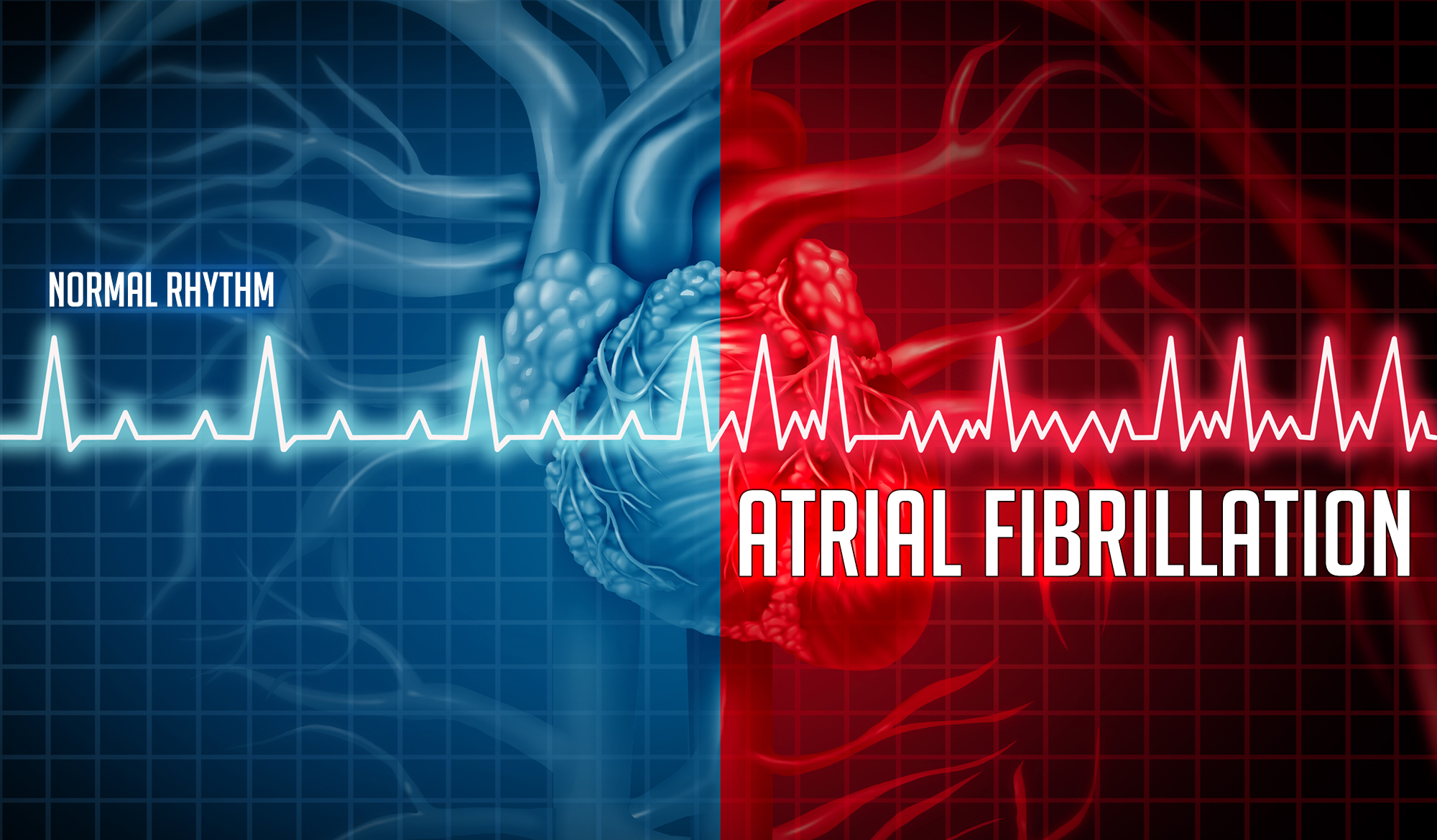
Atrial Fibrillation (AFib) is a very common heart rhythm disorder in which the atria (upper chambers of the heart) beat out of rhythm with the ventricles (lower chambers of the heart). This results in an irregular heartbeat called fibrillation, where the heart may beat too fast, too slow, or skip beats altogether with poor blood-pumping efficiency.
AFib affects up to 6 million adults in the United States and approximately 34 million people worldwide. It is the most prevalent heart arrhythmia. Many people with AFib are at a higher risk of death and disability, as it increases the risk of stroke and heart failure.

What is Atrial Fibrillation?
Atrial fibrillation, or AFib, is a type of heart arrhythmia in which the chambers of the heart beat irregularly and out of sync with one another. This irregular rhythm disrupts normal blood flow and can lead to complications such as blood clots, stroke, and heart failure.
AFib may feel like your heart is fluttering, racing, or skipping beats. Some people have no symptoms, while others may experience fatigue, shortness of breath, chest discomfort, or dizziness.
Atrial fibrillation is the most common sustained heart rhythm disorder, affecting millions of people worldwide. It can be occasional (paroxysmal), persistent, or permanent, and it often worsens over time without proper management.
Atrial Fibrillation vs Flutter
What’s the difference between atrial fibrillation vs flutter? Both are arrhythmias that start in the atria, but atrial flutter usually has a more regular rhythm, whereas atrial fibrillation is chaotic and erratic. While their symptoms can be similar, they are distinct conditions and may require different treatments.
Symptoms of Afib
Afib symptoms may include:
- Shortness of breath
- Feeling tired or weak
- Chest pain
- Drop in blood pressure
- Light-headedness or confusion
- Pounding or fluttering feeling in the chest (palpitations)
- Irregular pulse
Types of Atrial Fibrillation
There are a few different underlying causes and triggers of AFib. These are the most common:
AFib with RVR
AFib with RVR (rapid ventricular response) occurs when the irregular electrical signals from the atria cause the ventricles to beat too fast, often over 100 beats per minute.
This can lead to symptoms like chest pain, shortness of breath, dizziness, and fatigue, and may require urgent medical care to slow the heart rate and restore proper rhythm.
Vagus Nerve AFib
Vagal nerve atrial fibrillation is a heart rhythm disorder that commonly affects younger people with normally structured hearts. The vagus nerve is the longest in your autonomic nervous system, and it has a lot of important roles. It’s heavily involved in digestion, blood pressure, heart rate, sweating, and even the ability to speak.
Vagus nerve AFib may occur when the vagus nerve is stimulated, such as when you’re swallowing or even falling asleep. This condition is largely under-recognized.
AFib and Acid Reflux
There is some indication that AFib could lead to symptoms of acid reflux for some people, though the mechanism is still uncertain. Some researchers think there could be an inflammatory and vagus stimulatory effect that could link the two conditions.
The proximity of the esophagus and the left atrium may offer other clues. It’s possible that reducing acid reflux could help improve symptoms of AFib as well.
Insulin Resistance and AFib
Insulin resistance is a condition in which there’s an impaired ability of the body to respond to glucose, leaving blood sugar levels higher than normal. This happens before a diagnosis of diabetes in people of any body size.
Some research suggests a significant relationship between insulin resistance and the development of AFib, even when accounting for other potential factors like obesity. On the other hand, older research from the Framingham Heart Study has found that insulin resistance was not significantly associated with the development of AFib.
Who is at Risk?
There are many risk factors associated with AFib, including:
- Advancing age
- Electrolyte disturbances
- Stress
- Hypertension
- Heart disease
- Chronic kidney disease
- Diabetes
- Obesity
- Sleep apnea
- Serious illness or infection
- Excessive use of alcohol or stimulants
- Hyperthyroidism
Life expectancy with atrial fibrillation can vary depending on how well the condition is managed and whether other health issues are present.
While AFib itself isn’t usually life-threatening, it increases the risk of stroke, heart failure, and other complications that can shorten lifespan. With proper treatment, including medications, lifestyle changes, and monitoring, many people with AFib can live a long and healthy life.
AFib Basics: The Takeaways
Atrial fibrillation is a common but serious heart rhythm disorder that can increase your risk of stroke and other complications if left unmanaged. Understanding what AFib is, recognizing the symptoms, and knowing your risk factors are the first steps toward taking control of your heart health.
If you have AFib and are seeking lifestyle guidance, I can help you implement science-based nutrition either through 1:1 counseling or group coaching.
Learn more about my programs or click here to schedule a complimentary 15-minute discovery call.
Sources
- Moskowitz A, Chen KP, Cooper AZ, Chahin A, Ghassemi MM, Celi LA. Management of Atrial Fibrillation with Rapid Ventricular Response in the Intensive Care Unit: A Secondary Analysis of Electronic Health Record Data. Shock. 2017;48(4):436-440. doi:10.1097/SHK.0000000000000869 https://pubmed.ncbi.nlm.nih.gov/28328711/
- Wong BM, Green MS, Stiell IG. Rate Control Management of Atrial Fibrillation With Rapid Ventricular Response in the Emergency Department. Can J Cardiol. 2020;36(4):509-517. doi:10.1016/j.cjca.2019.08.040 https://pubmed.ncbi.nlm.nih.gov/31924453/
- Nesheiwat Z, Goyal A, Jagtap M. Atrial Fibrillation. [Updated 2023 Apr 26]. In: StatPearls [Internet]. Treasure Island (FL): StatPearls Publishing; 2025 Jan-. Available from: https://www.ncbi.nlm.nih.gov/books/NBK526072/
- Staerk L, Sherer JA, Ko D, Benjamin EJ, Helm RH. Atrial Fibrillation: Epidemiology, Pathophysiology, and Clinical Outcomes. Circ Res. 2017;120(9):1501-1517. doi:10.1161/CIRCRESAHA.117.309732 https://pmc.ncbi.nlm.nih.gov/articles/PMC5500874/
- Carpenter A, Frontera A, Bond R, Duncan E, Thomas G. Vagal atrial fibrillation: What is it and should we treat it?. Int J Cardiol. 2015;201:415-421. doi:10.1016/j.ijcard.2015.08.108 https://pubmed.ncbi.nlm.nih.gov/26310988/
- Kharbanda RK, van der Does WFB, van Staveren LN, Taverne YJHJ, Bogers AJJC, de Groot NMS. Vagus Nerve Stimulation and Atrial Fibrillation: Revealing the Paradox. Neuromodulation. 2022;25(3):356-365. doi:10.1016/j.neurom.2022.01.008 https://pubmed.ncbi.nlm.nih.gov/35190246/
- Velagapudi P, Turagam MK, Leal MA, Kocheril AG. Atrial fibrillation and acid reflux disease. Clin Cardiol. 2012;35(3):180-186. doi:10.1002/clc.21969 https://pubmed.ncbi.nlm.nih.gov/22318757/
- Linz, D., Hohl, M., Vollmar, J., Ukena, C., Mahfoud, F., & Böhm, M. (2017). Atrial fibrillation and gastroesophageal reflux disease: The cardiogastric interaction. EP Europace, 19(1), 16-20. https://doi.org/10.1093/europace/euw092
- Lee Y, Cha SJ, Park JH, et al. Association between insulin resistance and risk of atrial fibrillation in non-diabetics. Eur J Prev Cardiol. 2020;27(18):1934-1941. doi:10.1177/2047487320908706 https://pubmed.ncbi.nlm.nih.gov/32122201/
- Fontes JD, Lyass A, Massaro JM, et al. Insulin resistance and atrial fibrillation (from the Framingham Heart Study). Am J Cardiol. 2012;109(1):87-90. doi:10.1016/j.amjcard.2011.08.008 https://pubmed.ncbi.nlm.nih.gov/21996140/