

Of the roughly 805,000 heart attacks that happen in the U.S. each year, an estimated 170,000 are silent, meaning the person never even knew it happened. Silent heart attack symptoms are easy to miss because they often feel like nothing more than fatigue, mild discomfort, or a little bit of nausea.
Oftentimes, the warning signs go unnoticed, and the heart attack is only discovered later. This typically happens during a routine EKG or imaging test ordered for an unrelated reason.
It’s important to be aware of silent heart attack symptoms because it can often cause the same damage to your heart muscle as a heart attack that does present with typical symptoms.
This article covers what a silent heart attack is, the symptoms to watch for, who’s at risk, and what to do if you think you’ve had one.
What is a Silent Heart Attack?
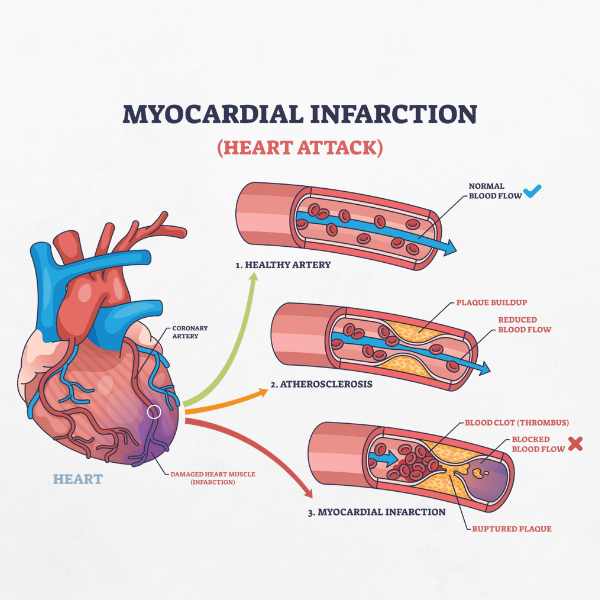
A silent heart attack, also known as silent myocardial infarction, happens when blood flow to your heart muscle gets blocked, but the symptoms are so mild that they aren’t detected.
You don’t feel the same chest pain that occurs during a typical heart attack. Many people don’t find out until later when a doctor uncovers signs of it on an EKG or imaging test.
A few key facts to know about silent heart attacks:
- They’re caused by the same blocked coronary arteries as any other heart attack.
- The disease process itself is the same; what’s different is how the body registers and reports the pain.
- They can develop from a broader condition called silent myocardial ischemia, a condition where the heart is deprived of oxygen-rich blood without noticeable symptoms. If this goes unrecognized, the ischemia can progress into more permanent heart muscle damage.
- Research shows silent heart attacks carry a similar level of risk of complications as heart attacks with clear symptoms.
What Are the Symptoms of a Silent Heart Attack?
As you can likely tell by the name, silent heart attack symptoms are difficult to detect as they’re happening. There’s no intense chest pain, but rather signs that are mild, vague, or easy to ignore.
Up to one third of heart attack patients don’t present with any chest pain at all.
Symptoms of a silent heart attack can include:
- Shortness of breath, with or without exertion
- Nausea or vomiting
- Unusual fatigue or weakness
- Lightheadedness or fainting
- Heart palpitations
- Discomfort in the jaw, neck, or upper back
- A feeling that resembles indigestion
These symptoms often get mistaken for something else, and it’s why so many silent heart attacks go unrecognized.
Some people don’t have any symptoms at all, and the heart attack is found later on.
Who Is at Risk for a Silent Heart Attack?
Certain health conditions, habits, and sex all play a role in your risk of a silent heart attack. Many of these risks overlap with risk factors for heart disease.
Research shows people who have had silent heart attacks have higher rates of high blood pressure, diabetes, and BMI compared to people without a heart attack.
You may be at higher risk for a silent heart attack if you have:
- High blood pressure
- Diabetes or high blood sugar
- A higher body mass index
- A history of smoking
- Older age
Women are also almost twice as likely to have a silent heart attack. This is likely driven by smaller areas of heart damage in women, combined with a long-standing gap in recognizing symptoms that don’t match the male-pattern presentation medical training has historically centered on.
If you have one or more of these risk factors, now is the time to take charge of your heart health. Get your labs checked to understand where you stand, and consider working with a preventive cardiology dietitian to build a science based nutrition plan that protects your heart.
How Is a Silent Heart Attack Diagnosed?
Since silent heart attacks don’t cause obvious symptoms, doctors almost always find them by accident during unrelated testing.
Common ways a silent heart attack is discovered:
- Electrocardiogram (EKG or ECG): Can show old Q waves or other changes suggesting past heart muscle damage.
- Echocardiogram: Ultrasound imaging that can reveal areas of the heart wall that aren’t moving or pumping normally.
- Cardiac MRI: More sensitive than an EKG at detecting scar tissue from a past heart attack.
- Troponin blood test: Measures a protein your heart releases when it sustains damage, though this test is more useful for detecting a recent event.
If one of these tests suggests you’ve had a silent heart attack, get a more complete cardiac workup to understand the full picture. This typically includes:
- A detailed cardiac panel, including cholesterol, ApoB, Lp(a), and inflammatory markers like hs-CRP and LpPla2 activity. More on labs here.
- Blood pressure and blood sugar evaluation
- Stress testing, coronary CT angiography, coronary calcium scoring, or invasive angiography to assess blood flow and plaque burden, depending on your risk profile
- A review of your family history and lifestyle risk factors
What are the Risks of an Undetected Silent Heart Attack?
Even if a heart attack is silent, it still damages your heart muscle. Left unaddressed, it can lead to future complications.
Potential risks of an undetected silent heart attack include:
- A second, more severe heart attack: Undetected damage raises your risk of another cardiac event.
- Heart failure: Damaged heart muscle can’t pump as effectively over time.
- Long-term mortality risk similar to a recognized heart attack: One long-term study found that after 10 years, mortality rates between unrecognized and recognized heart attacks were not significantly different.
- Arrhythmias: Scar tissue on the heart can disrupt normal electrical signaling.
- Sudden cardiac death: Some research links undetected heart attacks to a higher long-term risk of sudden cardiac death.
- Missed opportunity for prevention: Without a diagnosis, risk factors like high blood pressure, high cholesterol, and diabetes often go untreated.
The good news is that once a silent heart attack is identified, you can take an informed, empowered approach to protect your heart moving forward.
What To Do If You Suspect You’ve Had a Silent Heart Attack
If you’ve experienced silent heart attack symptoms, don’t wait to find out. Talk to your primary care provider, ask for an EKG, and get your labs checked. After that, request further testing if warranted.
You know your body more than anyone, and it’s always worth investigating if something feels off. No matter if you’ve had a heart attack or not, knowing your cardiac labs is important.
What Happens After a Silent Heart Attack?
Once a silent heart attack is confirmed, the focus shifts to protecting your heart from further damage. Treatment mirrors care after any heart attack, and may include:
- Medications: Statins, blood pressure medications, or aspirin, depending on your risk profile.
- Cardiac rehabilitation: A structured program to improve heart function and manage risk factors.
- Ongoing monitoring: Regular follow-up labs and imaging to track your heart health over time.
- Risk factor management: Addressing blood pressure, blood sugar, and cholesterol through nutrition and lifestyle changes.
- Science-based nutrition: Often overlooked, but it shouldn’t be. Medications help manage risk, but they don’t replace the role of diet and lifestyle in preventing another cardiac event. A personalized nutrition plan built with a preventive cardiology dietitian, targeting your specific labs and risk factors, is a critical part of a complete secondary prevention strategy.
Secondary prevention efforts do work, and with the right science based nutrition plan, it’s entirely possible to improve your heart health, protect your heart function, and significantly lower your risk of a second event.
Programs like Optimize are built exactly for that, a step-by-step approach to addressing the root causes of heart disease through targeted, science-based nutrition.
FAQs: Silent Heart Attack Symptoms
What are the signs of silent heart failure?
Silent heart failure is different from a silent heart attack. Think of it as the difference between your heart’s pumping function and its plumbing. A heart attack happens when blood flow through the coronary arteries, the plumbing, is blocked. Heart failure means the heart, the pump, isn’t circulating blood as well as it should.
Heart failure can also develop silently, sometimes without a person realizing it until it becomes advanced. Early signs can include mild fatigue, swelling in the legs or ankles, and a reduced ability to exercise. People often mistake these for normal aging, which is part of why heart failure can go undetected in its earlier stages.
Research has also linked silent heart attacks to a higher long-term risk of heart failure. One 13-year study found that a silent heart attack raised the risk of developing heart failure by 35%, even after accounting for other risk factors like blood pressure and diabetes.
How long does a silent heart attack last?
A silent heart attack lasts as long as any other heart attack, typically minutes to a few hours, while a blockage cuts off blood flow to the heart.
The difference is that the symptoms are mild enough that the event goes unrecognized at the time it happens.
How do you know if you’ve had a mini heart attack?
There’s no medical term for a “mini heart attack,” but people often use it to describe a smaller or less severe heart attack. The only reliable way to know is through testing. An EKG, echocardiogram, or cardiac MRI can detect heart muscle damage, even if you never noticed symptoms.
What are the four silent signs of a heart attack in a woman?
There’s no fixed list of four silent signs of a heart attack in a woman, but women commonly experience shortness of breath, unusual fatigue, nausea, and back or jaw discomfort instead of classic chest pain. Research shows women are nearly twice as likely as men to have an unrecognized heart attack, often due to these atypical symptoms.
What are silent heart attack symptoms?
Silent heart attack symptoms include shortness of breath, nausea, unusual fatigue, lightheadedness, heart palpitations, and discomfort in the jaw, neck, or upper back. People often chalk these symptoms up to something else, like the flu, indigestion, or simply feeling run down, so they miss them in the moment.
Some people have no symptoms at all, with the heart attack only discovered later through testing.
Do silent heart attack symptoms come and go?
Yes, silent heart attack symptoms can be brief, mild, or intermittent. This is part of what makes them easy to dismiss as something else, like indigestion or a passing wave of fatigue.
Does silent heart attack cause pain?
A silent heart attack can cause mild pain or discomfort, but it lacks the intense, unmistakable pain associated with a typical heart attack. Some people feel nothing at all, which is why they often go unrecognized.
What nutrition and lifestyle changes can lower your risk of a silent heart attack?
Nutrition plays a direct role in the risk factors tied to silent heart attacks. Adding in foods that support healthy cholesterol and ApoB levels, blood pressure, blood sugar, and nitric oxide bioavailability can meaningfully reduce your risk over time. Since Lp(a) and inflammation, like hs-CRP, also factor into your risk profile, working with a preventive cardiology dietitian can help you build a nutrition plan based on your own labs and health history.
About the Author
Michelle Routhenstein, MS, RD, CDE is a Cardiology Dietitian and Preventive Cardiology Nutritionist with over 14 years of experience helping people take control of their heart health. She graduated cum laude from New York University with both a Bachelor of Science and Master of Science in Nutrition and Dietetics, and has worked in clinical settings including a level-one trauma hospital in NYC.
As the owner of Entirely Nourished, Michelle has helped thousands of individuals lower their blood pressure and cholesterol, reduce their risk of heart attacks and strokes, and in many cases reduce or eliminate heart medications entirely through her science-based, personalized approach to nutrition. She specializes in helping women understand and address the deeper drivers of cardiovascular risk, including those that surface during and after pregnancy.
If you’re ready to take a proactive approach to your heart health, you can work with Michelle through individual nutrition counseling or inside her 6-week group program, Optimize, designed to give you clarity, confidence, and real results.
References
- Virani, S. S., Alonso, A., Aparicio, H. J., Benjamin, E. J., Bittencourt, M. S., Callaway, C. W., Carson, A. P., Chamberlain, A. M., Cheng, S., Delling, F. N., Elkind, M. S. V., Evenson, K. R., Ferguson, J. F., Gupta, D. K., Khan, S. S., Kissela, B. M., Knutson, K. L., Lee, C. D., Lewis, T. T., Liu, J., … American Heart Association Council on Epidemiology and Prevention Statistics Committee and Stroke Statistics Subcommittee (2021). Heart Disease and Stroke Statistics-2021 Update: A Report From the American Heart Association. Circulation, 143(8), e254–e743. https://doi.org/10.1161/CIR.0000000000000950
- Shams, P., Gul, Z., & Makaryus, A. N. (2024). Silent Myocardial Ischemia. In StatPearls. StatPearls Publishing.
- Valensi, P., Lorgis, L., & Cottin, Y. (2011). Prevalence, incidence, predictive factors and prognosis of silent myocardial infarction: a review of the literature. Archives of cardiovascular diseases, 104(3), 178–188. https://doi.org/10.1016/j.acvd.2010.11.013
- Canto JG, Shlipak MG, Rogers WJ, et al. Prevalence, Clinical Characteristics, and Mortality Among Patients With Myocardial Infarction Presenting Without Chest Pain. JAMA. 2000;283(24):3223–3229. doi:10.1001/jama.283.24.3223
- van Oortmerssen, J. A. E., Ntlapo, N., Tilly, M. J., Bramer, W. M., den Ruijter, H. M., Boersma, E., Kavousi, M., & Roeters van Lennep, J. E. (2024). Burden of risk factors in women and men with unrecognized myocardial infarction: a systematic review and meta-analysis †. Cardiovascular research, 120(14), 1683–1692. https://doi.org/10.1093/cvr/cvae188
- van der Ende, M. Y., Juarez-Orozco, L. E., Waardenburg, I., Lipsic, E., Schurer, R. A. J., van der Werf, H. W., Benjamin, E. J., van Veldhuisen, D. J., Snieder, H., & van der Harst, P. (2020). Sex-Based Differences in Unrecognized Myocardial Infarction. Journal of the American Heart Association, 9(13), e015519. https://doi.org/10.1161/JAHA.119.015519
- Cha, M. J., Kim, S. M., Kim, Y., Kim, H. S., Cho, S. J., Sung, J., & Choe, Y. H. (2018). Unrecognized myocardial infarction detected on cardiac magnetic resonance imaging: Association with coronary artery calcium score and cardiovascular risk prediction scores in asymptomatic Asian cohort. PloS one, 13(9), e0204040. https://doi.org/10.1371/journal.pone.0204040