

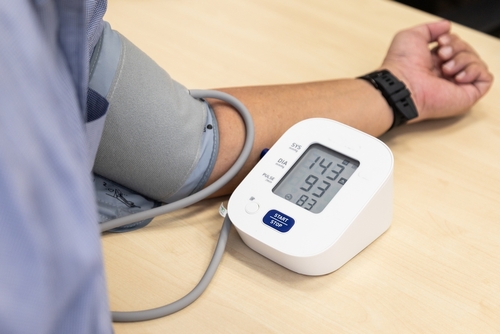
While it’s not the only factor, your blood pressure is one simple biomarker of cardiovascular wellness. Whether knowing your blood pressure is a new concept or you’re used to monitoring it at home, the following questions can help you understand its importance and how to manage it well.
1. What’s Considered a Normal Blood Pressure Reading?
For the average healthy adult, a normal blood pressure reading is below 120/80 mmHg, or below 130/80 mmHg for those over age 65. Certain populations also benefit from readings below 110/70 mmHg. Blood pressure levels can vary depending on individual factors like age, gender, activity level, having a genetic predisposition, and even the time of day when a reading is taken.
If blood pressure readings are consistently above what’s considered normal, lifestyle interventions (and sometimes medications) are recommended.
2. What’s the Difference Between Systolic and Diastolic Blood Pressure?
The top number (systolic) measures the pressure exerted on your artery walls when your heart beats, while the bottom number (diastolic) measures the pressure when your heart rests between beats.
Both numbers are important, and their trends can indicate your risk of having a heart attack or a stroke. Furthermore, it’s important to note that high blood pressure is when either of these numbers is elevated, not necessarily both at the same time.
3. Can High Blood Pressure Cause Stroke?
Having high blood pressure is a significant risk factor for having a stroke. This is because it puts extra strain on your blood vessels, which can lead to damage, narrowing, or rupture, especially in the brain.
Over time, having high blood pressure increases the likelihood of both ischemic strokes (from clots) and hemorrhagic strokes (from bleeding).
High blood pressure can also cause a slew of other health complications, learn about it here.
4. Can High Blood Pressure Cause Dizziness?
Dizziness can be a result of many health conditions, so if you’re experiencing it regularly, it’s important to speak with your healthcare provider. While it’s possible to experience dizziness from having high blood pressure, it’s not a primary symptom for everyone.
It might be more likely if you have blood pressure that suddenly spikes or if you’ve been prescribed a blood pressure-lowering medication that lowers it too much.
5. Does High Blood Pressure Cause Headaches?
Headaches can also be a symptom of many health conditions, and aren’t necessarily a sign of high blood pressure.
However, extremely high blood pressure (which is dangerous and is called a hypertensive crisis) can cause a headache. In this case, you’re more likely to have other symptoms as well, like chest pain, nausea, or heart palpitations, but symptoms are not always present.
Note: a hypertensive crisis is indicated by blood pressure of 180/120 mm Hg or higher, which requires immediate medical attention.
6. Does Drinking Alcohol Affect Blood Pressure?
Alcohol consumption is known to increase blood pressure. This is because alcohol activates the sympathetic nervous system, which raises heart rate and causes blood vessels to constrict. It can also alter the balance of hormones that help regulate blood pressure, making it harder to control.
Heavy drinking can lead to hypertension and make blood pressure-lowering medications less effective. One study found that people who drink needed a higher dosage of antihypertensive drugs than non-drinkers to achieve similar blood pressure control.
If you drink, do so in moderation, which is defined as one drink or less per day for women and men. If you don’t drink, there’s no reason to start.
Curious about how other drinks can affect blood pressure? Read my blog on what to drink with high blood pressure (and what to avoid).
7. What’s the Link Between High Blood Pressure and Shortness of Breath?
Having high blood pressure puts extra strain on your blood vessels, which makes your heart work harder to pump blood. This can lead to shortness of breath or dyspnea.
If your heart struggles to do its job efficiently, fluid can accumulate in your lungs and make it harder to breathe comfortably (especially when exercising or lying down).
If high blood pressure is not controlled, shortness of breath can eventually become a sign of heart failure.
8. How Much Sodium is Too Much for Someone With High Blood Pressure?
Keeping sodium intake in check is important, as excessive intake is known to encourage high blood pressure. Eating too much salt causes your body to hold on to extra water, increasing blood volume.
This puts more pressure on blood vessel walls and makes your heart work harder. Plus, salt can cause blood vessels to constrict and disrupt hormones that regulate blood pressure, further contributing to the rise.
While individual recommendations vary, sodium from foods should be limited to no more than 1,500 to 2,300 mg per day for someone with high blood pressure.
Another common question I get in my private practice is, does the type of salt matter for high blood pressure? Watch this short clip for the answer:
Most of the sodium we consume comes from ultra-processed and restaurant-prepared foods, so if you’re trying to reduce your intake, these are important places to start.
9. Can I Lower My Blood Pressure Without Medication?
Yes, lifestyle habits play a major role in preventing and managing high blood pressure, and not everyone requires medication.
Many people can bring their blood pressure levels down naturally by optimizing the nutritional quality of their diet, engaging in regular exercise, and improving their sleep and stress management.
Read more in my article about natural ways to lower blood pressure.
As a cardiovascular dietitian, I can help you understand your blood pressure readings and make effective lifestyle changes through 1:1 counseling or my Optimize group coaching program. I’ve had the pleasure of helping many people get off their medications through diet, with their physician making medication adjustments based on their blood pressure progress.
10. What Foods Are Best for Lowering High Blood Pressure?
Science-based nutrition is one of the most effective ways to lower high blood pressure, but it’s not as simple as “just eat less salt” or “add more vegetables.” As a registered dietitian who works specifically with cardiovascular health, I want people to understand that blood pressure regulation is deeply complex and influenced by multiple systems in the body.
A nutrient-dense diet isn’t just about general wellness — it directly impacts gut health, insulin resistance, nitric oxide production, kidney function, and even the way your body manages uric acid and inflammation. These interconnected biological pathways all play a role in blood pressure control.
When we think about food choices, it’s not just about individual ingredients, it’s about whether your overall diet is truly supporting these internal systems. For example, eating more foods that are rich in potassium, magnesium, fiber, and antioxidants can improve circulation and reduce vascular resistance. At the same time, limiting highly processed foods helps reduce the inflammatory and metabolic load on your cardiovascular system. This kind of targeted dietary strategy can help normalize blood pressure over time, but only when it’s done with an understanding of the deeper physiology at play.
If you’ve ever felt like you’re doing “all the right things” but still not seeing progress, it may be because your approach isn’t aligned with what your biology actually needs. That’s where working with a cardiovascular dietitian makes a difference. I help clients connect the dots between what they eat and how it’s impacting the hidden drivers of their blood pressure and together, we build a plan that’s both strategic and sustainable.
Understanding Your Blood Pressure: Final Thoughts
Having high blood pressure can feel overwhelming, but it’s important to approach it with small, sustainable changes. Supporting normal blood pressure levels (and ultimately, your heart health) depends on everyday habits like nutrition, movement, sleep, and stress management, as well as adhering to necessary prescription medications as necessary.
Need support and accountability? Check out my Optimize program or click here to schedule a complimentary 15-minute discovery call to see if we’re a good fit. Let’s take the pressure off, together.
Sources
- Singh JN, Nguyen T, Kerndt CC, et al. Physiology, Blood Pressure Age Related Changes. [Updated 2023 Aug 28]. In: StatPearls [Internet]. Treasure Island (FL): StatPearls Publishing; 2025 Jan-. Available from: https://www.ncbi.nlm.nih.gov/books/NBK537297/
- Wajngarten M, Silva GS. Hypertension and Stroke: Update on Treatment. Eur Cardiol. 2019;14(2):111-115. Published 2019 Jul 11. doi:10.15420/ecr.2019.11.1 https://pmc.ncbi.nlm.nih.gov/articles/PMC6659031/
- Arca KN, Halker Singh RB. The Hypertensive Headache: a Review. Curr Pain Headache Rep. 2019;23(5):30. Published 2019 Mar 14. doi:10.1007/s11916-019-0767-z https://pubmed.ncbi.nlm.nih.gov/30874912/
- Kowalski S, Goniewicz K, Moskal A, Al-Wathinani AM, Goniewicz M. Symptoms in Hypertensive Patients Presented to the Emergency Medical Service: A Comprehensive Retrospective Analysis in Clinical Settings. J Clin Med. 2023;12(17):5495. Published 2023 Aug 24. doi:10.3390/jcm12175495 https://pubmed.ncbi.nlm.nih.gov/37685560/
- Ye XF, Wang WY, Wang XY, Huang QF, Li Y, Wang JG. Alcohol Consumption and Antihypertensive Treatment Effect in Male Patients With Hypertension. Am J Hypertens. 2024;37(2):112-119. doi:10.1093/ajh/hpad091 https://pubmed.ncbi.nlm.nih.gov/37769181
- Centers for Disease Control. (2025). About Moderate Alcohol Intake. https://www.cdc.gov/alcohol/about-alcohol-use/moderate-alcohol-use.html
- Mitrouska I, Bolaki M, Vaporidi K, Georgopoulos D. Respiratory system as the main determinant of dyspnea in patients with pulmonary hypertension. Pulm Circ. 2022;12(1):e12060. Published 2022 Mar 23. doi:10.1002/pul2.12060 https://pmc.ncbi.nlm.nih.gov/articles/PMC9053013/
- American Heart Association. How Much Sodium Should I Eat Per Day? https://www.heart.org/en/healthy-living/healthy-eating/eat-smart/sodium/how-much-sodium-should-i-eat-per-day
- Aljuraiban GS, Gibson R, Chan DS, Van Horn L, Chan Q. The Role of Diet in the Prevention of Hypertension and Management of Blood Pressure: An Umbrella Review of Meta-Analyses of Interventional and Observational Studies. Adv Nutr. 2024;15(1):100123. doi:10.1016/j.advnut.2023.09.011 https://pubmed.ncbi.nlm.nih.gov/37783307/
- Amponsah-Offeh M, Diaba-Nuhoho P, Speier S, Morawietz H. Oxidative Stress, Antioxidants and Hypertension. Antioxidants (Basel). 2023;12(2):281. Published 2023 Jan 27. doi:10.3390/antiox12020281 https://pubmed.ncbi.nlm.nih.gov/36829839/
- Yang T, Maki KA, Marques FZ, et al. Hypertension and the Gut Microbiome: A Science Advisory From the American Heart Association. Hypertension. Published online July 17, 2025. doi:10.1161/HYP.0000000000000247 https://pubmed.ncbi.nlm.nih.gov/40671646/