

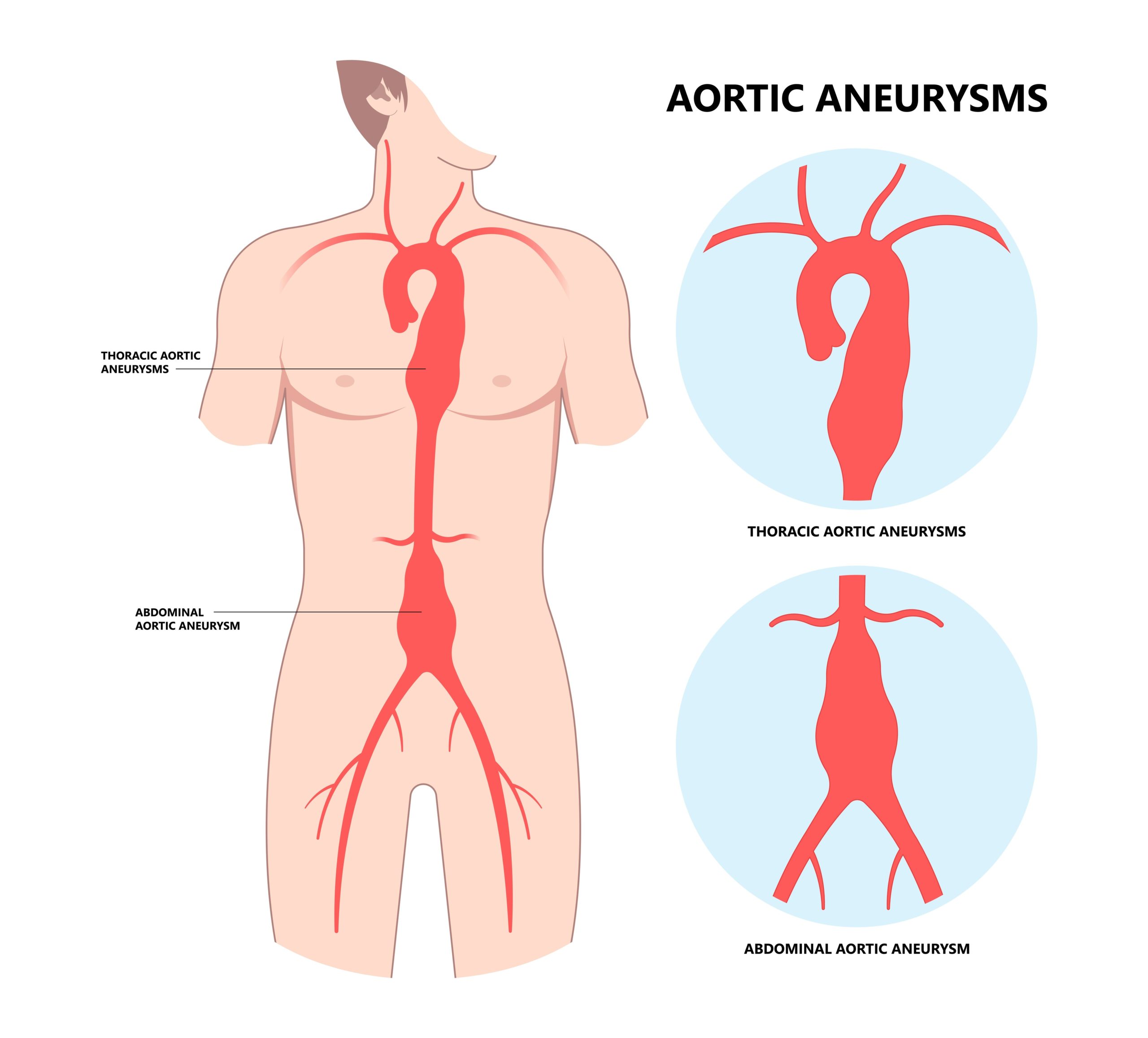
Aortic dilation, also known as aortic root dilatation or aortic root, is an enlargement of the aorta. This carries blood flow from the heart to the chest and torso. When it’s enlarged, it’s at a higher risk of tearing or rupturing.
Even mild dilatation is dangerous and potentially life-threatening because it’s a precursor to an aortic aneurysm, the complete rupture of the aorta.
Close monitoring is crucial, and fortunately, you can reduce your risk of aortic root dilation with proper diet, lifestyle, and prevention measures.
What Is Aortic Root Dilatation and Why It Matters
In aortic dilatation, a balloon-like structure forms around what starts as a weak spot on the aorta, increasing the risk of rupture or tear. Is a dilated aortic root dangerous? Yes, and having one can also cause circulating blood to leak back into the heart, blocking blood flow and increasing the risk of dangerous clots.
Research shows that an aortic diameter greater than 4cm may increase the risk of rupture. However, other factors are also at play, such as age, weight, and other cardiac risk factors.
If dilatation of the aorta is detected and treated, it requires frequent monitoring. If it grows large enough where a rupture occurs, this is called an aortic aneurysm and can be a life-threatening condition.

What Causes Aortic Root Dilatation?
Aortic dilatation in the general population is more common than many would think. According to one study of hospitalized patients, 6.9% of the population had this condition. Among those who are middle-aged (especially men), the prevalence is as much as 30-70%, or more for those carrying extra weight.
There are several potential causes of aortic root dilation. If you have any of these risk factors, consult with your doctor to get properly evaluated:
- Being overweight
- Smoking
- Being over 50 years old, especially men
- Family history
- High blood pressure
- High stroke volume (the volume of blood pumped with each heartbeat)
- High cholesterol and atherosclerosis (plaque build-up)
- Inflammatory conditions such as Takayasu’s, Marfan syndrome, Loeyz-Dietz syndrome, and giant cell arteritis
- Having a bicuspid aorta or connective tissue disorder
- Infections such as graft infection from a previous aneurysm repair (less common)
Fortunately, several of these risk factors are related to lifestyle and can be modified through working with a cardiac dietitian and medical team.
Warning Signs of Aortic Root Dilation
Aortic dilation often doesn’t cause any initial symptoms and is, instead, frequently detected on routine testing such as an echocardiogram or MRI. Typically, once the dilatation has grown to a certain size, symptoms are more likely to occur.
Here are the most common aortic root dilation symptoms to look out for:
- Chest pain
- Coughing/wheezing
- Shortness of breath
- Difficulty swallowing
- Hoarseness
- Upper back pain
Because an aorta dilation can be asymptomatic until severe, it’s crucial to have regular preventative health checkups, especially if you are at an increased risk.
How to Prevent Aortic Root Dilatation
While not always possible, preventing aortic root dilatation is optimal. Here are some of the top prevention measures you can implement to lower your risk.
- Don’t smoke. Smoking is one of the most common risk factors for aortic dilatation, and it may put you at an even higher risk than having atherosclerosis. For support to stop smoking, ask your doctor about a smoking cessation program.
- Maintain a healthy weight. Losing even a modest amount of weight can reduce the aortic diameter, lower your risk of aortic dilatation and aneurysms, and improve your overall heart health. A weight loss-focused diet should still be heart-healthy (I’ve seen many people lose weight on keto, which has accelerated their plaque progression significantly).
- Limit sodium. Too much sodium increases the risk of many cardiovascular problems, including high blood pressure and heart disease. These conditions increase the risk of aortic dilation. Sodium is found in ultra-processed, packaged foods, canned foods, and fast food, and is often added at the table. Check nutrition labels, as many products can be surprisingly high. It’s recommended to limit sodium intake to 2,300 milligrams per day. To meet this daily guideline, choose products with less than 300 mg of sodium per serving whenever possible.
- Focus on highly nutritious foods. Eat more potassium, calcium, and magnesium-containing foods to control blood pressure. These include heart-protecting foods such as beans, bananas, potatoes, broccoli, avocado, low-fat dairy, nuts, and seeds. If you avoid many of these foods, work with a cardiac dietitian to help create a customized nutrient-sufficient heart heart-healthy diet that promotes better blood flow, less arterial stiffness, and less strain on the heart, which can help reduce your risk of an aortic aneurysm.
- Manage blood pressure and cholesterol. Controlling blood pressure to less than 120/80mmHg or as determined by your doctor and keeping LDL (“bad” cholesterol) to less than 70 mg/dL with science-based nutrition is important to stabilize aortic dilation growth and possibly shrink it. Long-term implementation through sustainable habits is key.
- Exercise. Research shows that a higher level of physical activity, including higher-intensity cardio and strength training, can reduce the risk of an aortic aneurysm. Always speak to your doctor about the safest exercise program for you.
- Get regular preventative health screenings. Especially since aortic dilatation is often a silent condition, it’s critical to schedule regular health check-ups. Be your own advocate, ask questions, express concerns, and get tested.
Aortic Root Treatment Options
If aortic root dilation is already present, several treatment options exist, depending on the specific situation.
Medical and Surgical Treatment Options:
- Blood pressure and cholesterol-lowering medications, such as beta-blockers or statins
- Regular testing to monitor the aneurysm size, typically at least every 6 months
- Open surgery or vascular repair to remove the aneurysm or damaged portion
Lifestyle Treatment Options:
- Science-based, nutrient-sufficient, heart-healthy diet
- Maintaining a healthy weight
- Not smoking
- Regular exercise, which may be less intense or aimed at cardiac recovery, especially if you had aortic surgery
Client Success Story
A 55-year-old gentleman came to see me because his cardiologist was recommending surgery for his dilated ascending thoracic aorta aneurysm. He wanted to try controlling his heart disease and weight through a proactive, science-based approach.
He had an increased waist circumference (42 inches), uncontrolled blood pressure (despite medication), and a history of diet fluctuations where he would yo-yo with his weight. We worked closely together in an extended 6-month VIP program.
Within 6 weeks, his blood pressure average went from 145/90mmHg to 115/75mmHg. In 6 months, he had lost (and maintained) 5.5 inches off of his waist and 25 pounds, and continued with normalized blood pressure. He also received his echocardiogram results, and his ejection fraction went from 45% to 65%, and his aortic root decreased from 4.9cm to 4.2cm.
His doctor discontinued his blood pressure medication and decided to hold off on surgery, recommending he continue what he was doing. We worked together to merge the science with his diet and lifestyle for long-term implementation, adding therapeutic foods to improve blood flow, lower blood pressure, and optimize cardiovascular function.
Aortic Root Dilatation FAQs
Can a dilated aortic root return to normal size?
In some cases, a mildly dilated aortic root can shrink with lifestyle changes, weight loss, and blood pressure control. However, reversal depends on the cause, and more advanced dilatation often requires long-term monitoring or medical intervention.
What size aortic root is considered dangerous?
An aortic root larger than 4cm is generally considered dilated, and the risk increases significantly when it exceeds 5cm. At that point, surgical repair to prevent rupture may be necessary.
Is aortic root dilatation the same as an aneurysm?
Not exactly. Dilatation is the early enlargement of the aortic root, while an aneurysm is a more advanced and dangerous stage with a higher risk of rupture. Both conditions require close monitoring and intervention.
Aortic Dilation: The Takeaways
Aortic root dilatation is a serious but often manageable condition when detected early. Addressing key risk factors like blood pressure, weight, and cholesterol, and working closely with your healthcare team, can help minimize complications and support your heart health in the long run.
Interested in personalized guidance using science-based nutrition? Consider working with me 1:1 or participating in my Optimize group coaching program.
Sources
- Erbel R, Eggebrecht H. Aortic dimensions and the risk of dissection. Heart. 2006;92(1):137-142. doi:10.1136/hrt.2004.055111 https://pmc.ncbi.nlm.nih.gov/articles/PMC1861012/
- Babu, A., Meng, Z., Oji, O., Bowker, T., & Xiao, H. (2021). How common is aortic dilatation? European Heart Journal – Cardiovascular Imaging, 22(Supplement_1). https://doi.org/10.1093/ehjci/jeaa356.016
- Kauhanen SP, Saari P, Jaakkola P, et al. High prevalence of ascending aortic dilatation in a consecutive coronary CT angiography patient population. Eur Radiol. 2020;30(2):1079-1087. doi:10.1007/s00330-019-06433-z https://pmc.ncbi.nlm.nih.gov/articles/PMC6957537/
- Teixido-Tura G, et al. (2015). Determinants of Aortic Root Dilatation and Reference Values Among Young Adults Over a 20-Year Period: Coronary Artery Risk Development in Young Adults Study. Hypertension, 66(1). https://doi.org/10.1161/HYPERTENSIONAHA.115.05156
- Norman PE, Curci JA. Understanding the effects of tobacco smoke on the pathogenesis of aortic aneurysm. Arterioscler Thromb Vasc Biol. 2013;33(7):1473-1477. doi:10.1161/ATVBAHA.112.300158 https://pmc.ncbi.nlm.nih.gov/articles/PMC3683352/
- Stoll S, Sowah SA, Fink MA, et al. Changes in aortic diameter induced by weight loss: The HELENA trial- whole-body MR imaging in a dietary intervention trial. Front Physiol. 2022;13:976949. Published 2022 Sep 20. doi:10.3389/fphys.2022.976949 https://pmc.ncbi.nlm.nih.gov/articles/PMC9531129/
- Challa HJ, Ameer MA, Uppaluri KR. DASH Diet To Stop Hypertension. In: StatPearls. Treasure Island (FL): StatPearls Publishing; January 23, 2023. https://pubmed.ncbi.nlm.nih.gov/29494120/
- USDA Dietary Guidelines for Americans 2020-2025. https://www.dietaryguidelines.gov/sites/default/files/2020-12/Dietary_Guidelines_for_Americans_2020-2025.pdf
- Aune, D., Sen, A., Kobeissi, E., Hamer, M., Norat, T., & Riboli, E. (2020). Physical activity and the risk of abdominal aortic aneurysm: A systematic review and meta-analysis of prospective studies. Scientific Reports, 10(1), 1-10. https://doi.org/10.1038/s41598-020-76306-9
- Chaddha A, Eagle KA, Braverman AC, et al. Exercise and Physical Activity for the Post-Aortic Dissection Patient: The Clinician’s Conundrum. Clin Cardiol. 2015;38(11):647-651. doi:10.1002/clc.22481 https://pmc.ncbi.nlm.nih.gov/articles/PMC6490791/