

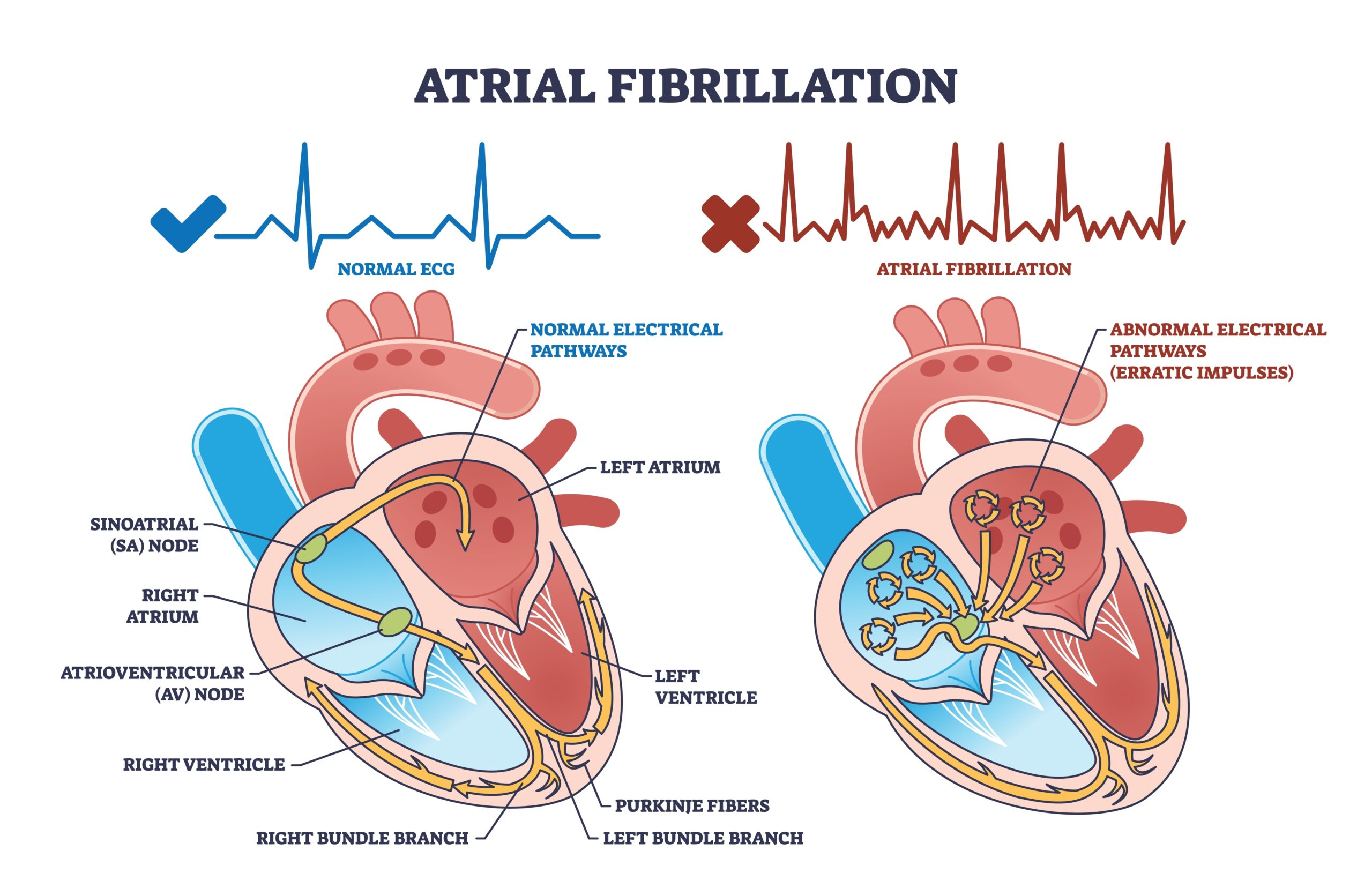
Atrial fibrillation (AFib) is a common heart rhythm disorder that causes the heart to beat irregularly, which can increase the risk of stroke and other cardiovascular complications.
Medications used for AFib may not be adequate for treatment or prevention. This means the medication always needs to be paired with nutrition to reduce heart health complications. Making lifestyle changes, like following an AFib diet along with other lifestyle changes, are important ways to prevent AFib attacks.
Foods to Avoid to Prevent AFib Attacks
Nutrition is a key aspect of Afib management and overall cardiovascular health. Below are some foods and ways of eating that cause the most confusion, and what the science says about their impact on Afib.
Low-Carb Diet
Low-carbohydrate diets (i.e., keto, LCHF, paleo) are very popular because they can produce short-term weight loss. However, restricting carbohydrates is not recommended, especially in regard to its impact on heart disease.
One large-scale study on low-carb diets and AFib included more than 13,000 participants and had a follow-up period of 22.4 years. The authors found that low-carb diets increased the risk of AFib, regardless of the kind of fat or protein participants ate in place of carbs.
This may be because low-carb diets are generally lower in vegetables, fruits, and whole grains, which also reduce vitamins and anti-inflammatory nutrients in the diet. There is a well-known association between inflammation and AFib, so a diet lacking in inflammation-fighting foods may increase the risk of AFib attacks.
Furthermore, one variation of a low-carb diet, called a keto AFib diet, contains high amounts of fat and protein. This may trigger harmful stress in your cells, another risk factor for AFib.
Overall, low-carb diets come with a higher risk of developing nutrient deficiencies as well as changes in digestive health and may promote the development of AFib.
Alcohol
There have been many studies showing a strong relationship between alcohol and AFib. The Framingham Heart Study found that drinking at least 3 alcoholic beverages per day significantly increased AFib risk among men.
In addition to this, researchers found that with each additional standard drink, the risk of AFib increased by 8%. There doesn’t appear to be one single worst type of alcohol for AFib, so avoiding or limiting alcohol in general may be a simple step towards AFib prevention.
Excess Sodium
Research has found that eating a lot of sodium doesn’t just raise your blood pressure and increase your risk of having a heart attack and stroke; it also significantly increases the risk of AFib, regardless of age, weight, or blood pressure.
To prevent AFib attacks, limit your intake to 1,500 mg per day and be mindful of hidden sources of sodium. For instance, put ultra-processed, convenience items on your list of what foods to avoid with AFib.
Fish Oil
Fish oil became very popular a few decades ago as a way to help lower blood triglyceride levels, which can be very effective for some people. However, new risks of taking fish oil over the long term have recently come to light.
A 2021 meta-analysis and review of 7 studies published in Circulation discusses the potential link between fish oil supplementation and the risk of developing AFib.
Researchers concluded that patients who regularly took fish oil for an average of 5 years were more likely to develop AFib symptoms compared to patients who did not use it. This risk was even higher among patients taking over 1 gram of fish oil per day.
Another 2021 study published in JAMA, which included over 25,000 participants and a 5-year follow-up, concluded that fish oil supplementation provided no notable risk reduction for AFib. This was compared to individuals who were given either a placebo or a vitamin D supplement.
These two studies evaluated the effect of fish oil supplementation on the incidence of AFib. This research would not apply to eating fish as part of a heart-healthy diet. Increasing your intake of omega-3s from fish can lower your risk of AFib, which we will discuss below.
Caffeine
Caffeine is a known stimulant of the central nervous system. Caffeine also speeds up the heart rate, which can cause an AFib attack for some people.
Overall, caffeine can speed up your heart rate, bringing it out of rhythm, and increasing your risk of AFib. If you have AFib, it’s best to avoid caffeinated beverages, such as coffee, tea, and energy drinks. Read ingredient labels to determine whether a drink contains caffeine if you’re unsure, and choose decaffeinated beverages instead.
Onions
There’s mixed and mostly anecdotal evidence regarding onions and AFib, particularly whether they help or hurt AFib symptoms. Overall, it’s best to pay attention to whether onions (or any food) trigger AFib for you. Keeping a food journal can help identify dietary triggers so you can remove them accordingly.
Best Foods for Atrial Fibrillation
So, what are some of the best foods to eat for AFib? Here are some key nutrients and where to find them.
Magnesium
Magnesium is an electrolyte in your body. It helps maintain a steady heartbeat, normal blood pressure, and healthy muscle function. In the Framingham Heart Study, people who ate the least amount of magnesium were 50% more likely to develop AFib than people who ate moderate to high amounts.
It’s difficult to obtain adequate levels of magnesium if you don’t plan it thoroughly into your AFib diet. Some foods rich in magnesium include pumpkin seeds, black beans, and quinoa. You can find more information about magnesium and foods that are good sources of this important electrolyte here.
Magnesium also influences the movements of potassium, sodium, and calcium across cell membranes. Studies show that potassium in muscles will not normalize unless magnesium is sufficient. Low levels of potassium have been shown to increase the risk of AFib as well.
Bananas
Bananas and AFib? Yes! Bananas are good for atrial fibrillation because of their high potassium content. One medium-sized banana contains around 400 mg of potassium, and the RDA for potassium for adults is 4700 mg.
Like magnesium, potassium is also an electrolyte and plays a key role in helping prevent AFib. An estimated 98% of Americans don’t get enough potassium in their diet. This is likely because the standard American diet is often lacking in fruits and vegetables, and most natural potassium comes from plants.
In a study of more than 4,000 participants, low levels of potassium were associated with a significantly higher risk of AFib, suggesting that eating a potassium-rich diet may offer some protective benefits.
Potassium supplements should be avoided without medical supervision because they can cause AFib.
Omega-3s
The omega-3 fatty acids EPA and DHA (found mostly in fish) have long been associated with improved heart health. Omega-3s help prevent heart disease by improving blood pressure and fats in the blood, as well as decreasing the risk of sudden death.
When it comes to omega-3 and AFib, studies initially reported mixed results. However, recent studies suggest that omega-3s could be good for people with AFib, as they reduce inflammation and abnormal heart rhythms. These effects found that eating fish not only protected against future AFib attacks but also improved symptoms overall.
A large study found that those who consumed a moderate amount of fish in their diets, about the equivalent of 1 ounce per day of fish, had the lowest risk of AFib.
Since fish oil supplements may not be optimal for those with AFib, it is best to eat omega-3-rich fish instead for the anti-inflammatory and heart-health benefits.
Extra Virgin Olive Oil
The PREDIMED trial found that AFib risk was lowered by 38% when participants added extra virgin olive oil (EVOO) to their diet.
EVOO has been found to decrease the inflammatory response found in those with AFib. Secondly, the antioxidants in EVOO help fight oxidative stress that may promote the development of AFib.
Exercise and Weight Loss for AFib
Does exercise help AFib? Yes! In addition to the recommended diet changes above, it’s important to remember that an optimal diet goes hand in hand with exercising with AFib.
However, having AFib can make it difficult to exercise regularly due to the potential for a racing heart, which can lead to a drop in blood pressure and feelings of lightheadness. There’s also some evidence that long-term endurance exercise may worsen AFib, so long-distance running may not be the best option.
Still, exercising with Afib (when done in a non-strenuous manner) is beneficial for health, longevity, and maintaining an optimal weight. Be sure to stop if you feel lightheaded or otherwise need a break.
It’s important to find activities you enjoy doing rather than making exercise a chore you never look forward to doing. This could be a combination of things like strength training, interval workouts, jogging, yoga, and riding an exercise bike. Always speak to your doctor about the best type of exercise for you.
Furthermore, regular exercise with AFib can help support healthy weight loss and weight maintenance, which is good for your heart.
A recent study reported that AFib patients were six times more likely to survive if they lost more than 10% of their body weight, compared to patients who lost less weight. The same study also showed that sustaining this weight loss resulted in significant maintenance of regular heart rhythm.
Client Success Story
A 56-year-old gentleman came to see me to “get serious about long-term heart health.” He wanted to lose weight and reverse early signs of insulin resistance. He mentioned he recently had an Afib episode, and he wanted to enjoy his retirement years without chronic conditions.
We worked closely together in my VIP program and focused on ADDING foods to help optimize his cardiometabolic health and keep Afib in remission.
In our initial evaluation, a lot more became apparent about his heart health optimization picture.
He had high blood pressure, averaging 140/85mmHg, and he was unfortunately never told the link between high blood pressure and Afib. He mentioned his electrophysiologist only spoke about ablation and medication as a form of treatment.
He also had a high calcium score, and his lipid panel needed to be optimized further to reach his target values. We started working together during his busy travel season, and even with that challenge, he got great results:
- Within 3 weeks, his blood pressure was averaging 114/72mmHg – he was so shocked he tested on 4 machines, all of which gave the same reading.
- In 4 months, at his repeat lab draw, his atherogenic LDL substantially decreased – his LDL particle size went from 1435nmol/L to 775nmol/L (that is a 46% decrease!), LDL small went from 289mg/dL to 156nmol/L, his LDL went from 52mg/dL to 30mg/dL, his apoB went from 57mg/dL to 50mg/dL, and his triglycerides when from 87mg/dL to 71mg/dL.
- He also lost 20lbs (an “all-time weight low since married for 30 years”) and inches off his waist.
He did not have any Afib episodes for 4 months and counting. He maintained his blood pressure, and at his cardiologist’s office, it was 110/70mmHg. He said he has never felt this good, and while he wished he could have added more physical activity into his regimen, 95% of his change was from nutrition alone.
AFib Diet FAQs
Can AFib be managed with diet alone?
Diet can play a major role in reducing AFib symptoms and attacks, and it’s best combined with other lifestyle changes and medical treatment. Always work with your healthcare team, including a cardiac dietitian, to create a personalized plan.
What foods should I avoid if I have AFib?
Avoid foods high in sodium, caffeine, and alcohol, as they can trigger irregular heart rhythms. Low-carb, high-fat diets and fish oil supplements may also increase AFib risk in some people.
AFib may be triggered by nutrient deficiencies, gut issues (like acid reflux or constipation), high blood pressure, insulin resistance, and inflammation. It’s often multifactorial, and can be significantly addressed through proper diet.
Is coffee bad for AFib?
Caffeine can speed up the heart rate and may trigger AFib in some individuals, though research is mixed. If you notice symptoms after drinking coffee, it’s best to switch to decaf or avoid it altogether.
What nutrients support normal heart rhythm?
Magnesium, potassium, and omega-3 fatty acids are key nutrients that help regulate heart rhythm and reduce inflammation. A diet rich in atrial fibrillation foods to eat, like fruits, vegetables, legumes, and healthy fats, can help ensure you’re getting enough.
AFib Diet: What To Do Now
A healthy diet is not only key to preventing and improving AFib risk, but it’s also necessary for a long and healthy life. Improving your diet goes alongside any necessary changes to your caffeine and alcohol intake, exercise, sleep, and stress management. Work with a cardiovascular dietitian who can help you design a personalized approach that is feasible and sustainable.
As a preventive cardiology dietitian who specializes in heart diseases such as Afib, I’ve helped thousands of people wondering how to stop AFib attacks and feel better than ever. I would love to help you, too.
Book a 15-minute complimentary call to see if we would be a good fit.
Sources
- Zhang S, Zhuang X, Lin X, et al. Low-Carbohydrate Diets and Risk of Incident Atrial Fibrillation: A Prospective Cohort Study. J Am Heart Assoc. 2019;8(9):e011955. doi:10.1161/JAHA.119.011955 https://pubmed.ncbi.nlm.nih.gov/31020911/
- Korantzopoulos P, Letsas KP, Tse G, Fragakis N, Goudis CA, Liu T. Inflammation and atrial fibrillation: A comprehensive review. J Arrhythm. 2018;34(4):394-401. Published 2018 Jun 4. doi:10.1002/joa3.12077 https://pubmed.ncbi.nlm.nih.gov/30167010/
- Hatley M, Lam T, Ekeruo I, Taegtmeyer H. Alcohol and Atrial Fibrillation: An Update and New Perspectives. Am J Med. 2024;137(11):1042-1048. doi:10.1016/j.amjmed.2024.06.038 https://pubmed.ncbi.nlm.nih.gov/38971529/
- Zhang Y, Guo X, Saitz R, et al. Secular trends in alcohol consumption over 50 years: the Framingham Study. Am J Med. 2008;121(8):695-701. doi:10.1016/j.amjmed.2008.03.013 https://pmc.ncbi.nlm.nih.gov/articles/PMC2562028/
- Johnson LS, Mente A, Joseph P, et al. Sodium Intake and Incident Atrial Fibrillation in Individuals With Vascular Disease. JAMA Netw Open. 2024;7(7):e2421589. Published 2024 Jul 1. doi:10.1001/jamanetworkopen.2024.21589 https://pubmed.ncbi.nlm.nih.gov/38990569/
- Gencer B, et al. Effect of Long-Term Marine ɷ-3 Fatty Acids Supplementation on the Risk of Atrial Fibrillation in Randomized Controlled Trials of Cardiovascular Outcomes: A Systematic Review and Meta-Analysis. Circulation, 144(25). https://doi.org/10.1161/CIRCULATIONAHA.121.055654
- Albert CM, Cook NR, Pester J, et al. Effect of Marine Omega-3 Fatty Acid and Vitamin D Supplementation on Incident Atrial Fibrillation: A Randomized Clinical Trial. JAMA. 2021;325(11):1061–1073. doi:10.1001/jama.2021.1489 https://jamanetwork.com/journals/jama/fullarticle/2777469
- Hamad AKS. Caffeine and Arrhythmias: A Critical Analysis of Cardiovascular Responses and Arrhythmia Susceptibility. J Saudi Heart Assoc. 2024;36(4):335-348. Published 2024 Nov 16. doi:10.37616/2212-5043.1402 https://pubmed.ncbi.nlm.nih.gov/39687718/
- Khan AM, Lubitz SA, Sullivan LM, et al. Low serum magnesium and the development of atrial fibrillation in the community: the Framingham Heart Study. Circulation. 2013;127(1):33-38. doi:10.1161/CIRCULATIONAHA.111.082511 https://pmc.ncbi.nlm.nih.gov/articles/PMC3541701/
- Krijthe BP, Heeringa J, Kors JA, et al. Serum potassium levels and the risk of atrial fibrillation: the Rotterdam Study. Int J Cardiol. 2013;168(6):5411-5415. doi:10.1016/j.ijcard.2013.08.048 https://pubmed.ncbi.nlm.nih.gov/24012173/
- Colussi G, Catena C, Fagotto V, et al. Atrial fibrillation and its complications in arterial hypertension: The potential preventive role of ω-3 polyunsaturated fatty acids. Crit Rev Food Sci Nutr. 2019;59(12):1937-1948. doi:10.1080/10408398.2018.1434126 https://pubmed.ncbi.nlm.nih.gov/29381383/
- Rix TA, Joensen AM, Riahi S, et al. A U-shaped association between consumption of marine n-3 fatty acids and development of atrial fibrillation/atrial flutter-a Danish cohort study. Europace. 2014;16(11):1554-1561. doi:10.1093/europace/euu019 https://pubmed.ncbi.nlm.nih.gov/24574493/
- Martínez-González MÁ, Toledo E, Arós F, et al. Extravirgin olive oil consumption reduces risk of atrial fibrillation: the PREDIMED (Prevención con Dieta Mediterránea) trial [published correction appears in Circulation. 2019 Dec 10;140(24):e939. doi: 10.1161/CIR.0000000000000716.]. Circulation. 2014;130(1):18-26. doi:10.1161/CIRCULATIONAHA.113.006921 https://pubmed.ncbi.nlm.nih.gov/24787471/
- Elliott AD, Linz D, Verdicchio CV, Sanders P. Exercise and Atrial Fibrillation: Prevention or Causation?. Heart Lung Circ. 2018;27(9):1078-1085. doi:10.1016/j.hlc.2018.04.296 https://pubmed.ncbi.nlm.nih.gov/29891251/