

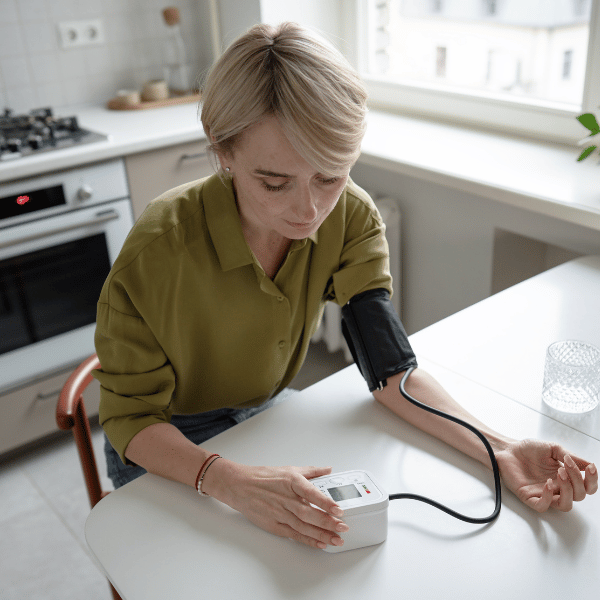
Menopause and high blood pressure can show up together for a lot of women. As estrogen levels drop, blood vessels become less flexible, and blood pressure can begin to climb even for some women who have never had elevated blood pressure before.
If your numbers have begun to rise in perimenopause or menopause or you want to prevent them from rising as you age, you’re in the right place. As a cardiovascular dietitian, I help patients use targeted, science based nutrition to lower high blood pressure and protect their heart health.
This article covers why menopause high blood pressure develops, why it deserves your attention, common symptoms, how to monitor your numbers, and evidence based nutrition to support healthy blood pressure.
Can Menopause Cause High Blood Pressure?
For many women, menopause can cause high blood pressure. Estrogen plays a protective role in cardiovascular health. As it begins to drop during perimenopause and menopause, a few things start to shift:
- Blood vessels lose flexibility: Less estrogen means less support for the blood vessel lining, so arteries stiffen more easily.
- Nitric oxide bioavailability declines: This molecule helps blood vessels relax and widen, so lower nitric oxide bioavailability makes it harder to keep blood pressure in a healthy range. Shifts in the gut microbiome during menopause can also affect how well the body converts nitrates from food into usable nitric oxide.
- The body becomes more salt sensitive: Blood pressure can respond more strongly to sodium intake than it did earlier in life.
- Fat distribution shifts: Fat may move toward the abdomen during menopause, and this type of fat is more metabolically active and linked to higher blood pressure.
- Vascular aging speeds up: Natural age-related artery stiffening overlaps with these hormonal changes, compounding the effect.
These trends tend to move together during this transition, causing blood pressure to climb more noticeably during menopause than during other stages of life.
While these shifts can occur, it’s important to note that by shifting toward a targeted, science-based nutrition plan, we can still improve your vascular health and lower your blood pressure naturally.
In my practice, the goal is always to make sure the body has enough of the nutrients that support these pathways.
While hormone replacement therapy (HRT) may help manage symptoms during menopause, it’s an individualized decision based on assessing your specific case. Current research shows it is not used for the prevention of heart disease. Your diet matters in this full picture, supporting your vascular health regardless of whether HRT is part of your plan.
A Client Story: What’s Possible With the Right Nutrition Plan
A 56-year-old client came to me last November after a calcium score scan revealed an aortic root dilation. She’d spent her life caring for everyone else, her grandchildren and aging parents included, but never prioritized her own heart health.
Her goals were clear: stabilize her aortic root, lower her LDL particles and ApoB, and get off blood pressure medication. Her blood pressure averaged 130s over 80s, and her labs showed a high number of small, dense LDL particles, one of the most atherogenic patterns we see.
We didn’t overhaul her entire life. We simply closed the gaps in her nutrition with targeted, evidence-based changes.
Four months later, her LDL particle number dropped 48%, small dense LDL fell 57%, and ApoB dropped 17%. Her blood pressure measured 113/70, and she came off medication completely. Her doctor’s response: no statin needed, keep doing exactly what you’re doing.
In her words: “I feel so good. I can be with my grandchildren and enjoy my life. This is just part of my day-to-day now.”
Why Having High Blood Pressure During Menopause Matters
Having high blood pressure during menopause can often go undetected, and it can be easy to brush off an elevated reading. But high blood pressure often works silently in the background, and can raise your risk for heart attack, stroke, heart failure, kidney disease, and cognitive decline.
Research shows postmenopausal women face these risks at lower blood pressure thresholds than men, and are more likely to experience cognitive decline linked to high blood pressure than men are.
This means monitoring your blood pressure matters even more during this stage of life, since it’s often silent, and actively working toward an optimal target of 110/70 mmHg can meaningfully lower these risks.
Additionally, high blood pressure is associated with heart palpitations because the heart works harder when blood vessels are under pressure. The two often share similar root causes, such as nitric oxide bioavailability and inflammation, which can be addressed through targeted science based nutrition.
This is exactly what I focus on in my 1:1 work, helping clients move both their blood pressure and palpitations toward better numbers through targeted nutrition. If you’d like support getting there, I’d love to work with you.
Menopause High Blood Pressure Symptoms
High blood pressure is often referred to as the “silent killer,” because many times, it causes no symptoms at all. Elevated readings are often discovered during a routine doctor’s visit.
When symptoms do appear, they can include:
- Headaches that feel different from your usual tension headaches
- Dizziness or lightheadedness
- Vision changes, such as blurriness or seeing spots
- Heart palpitations or a pounding sensation in the chest, neck, or ears
- Fatigue that does not improve with rest
- Fluid retention in the hands, feet, or ankles
These symptoms can overlap with typical menopause symptoms as well, which makes it difficult to catch.
Severe symptoms like sudden vision loss, difficulty speaking, or intense chest pain need immediate medical attention.
Because symptoms are often missing or easy to dismiss, home monitoring is a reliable way to catch changes early.
How to Monitor Blood Pressure During Menopause
Perimenopause is a good time to start monitoring at home, even if you still have normal blood pressure readings. Since blood pressure can shift gradually during this transition, having a baseline makes it much easier to catch changes early.
Here’s a quick overview of how to monitor blood pressure at home accurately:
- Choose a validated device. Not all home monitors are accurate. Look for one listed on ValidateBP.org.
- Use the correct cuff size. A cuff that’s too small or too large can skew your readings.
- Position yourself correctly. Sit with your back supported, feet flat, and your arm resting at heart level.
- Check both arms first. Use whichever arm reads higher for future measurements.
- Measure consistently. Morning readings, before caffeine or medication, tend to be most reliable. Track your numbers over time rather than relying on a single reading.
For a full walkthrough, read my complete guide to measuring blood pressure at home.
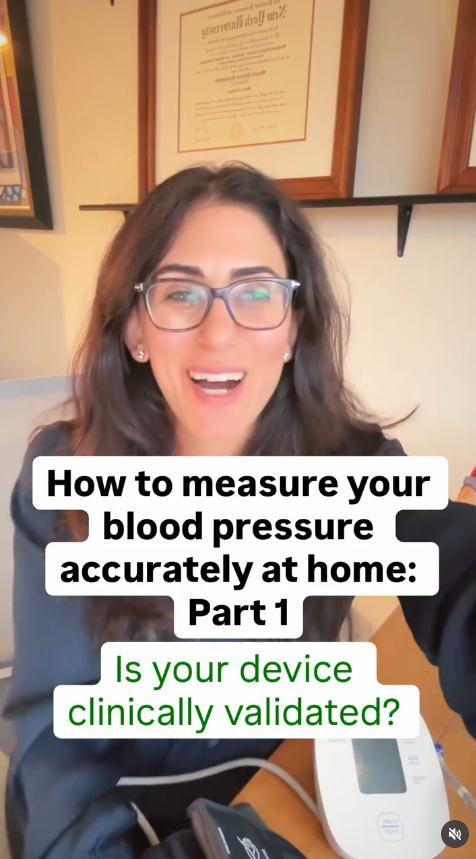
You can also follow along with my Instagram series for a step-by-step visual walkthrough. Here’s part 1:
Targeted, Science Based Nutrition for Managing Blood Pressure in Menopausal Women
Once you understand what’s driving your numbers, the next step is knowing what to actually do about it. Rather than generic low-sodium advice, an effective approach targets the specific nutrient gaps behind each of those factors.
Nitric oxide bioavailability is a complex pathway that involves more than just food. To support it during menopause, focus on:
- A healthy oral microbiome, which helps convert dietary nitrates into nitric oxide precursors
- A balanced gut microbiome, which supports nitric oxide metabolism and vascular health
- Nitrate and L-arginine-rich foods, like leafy greens, beets, walnuts, and sesame seeds
- Reducing oxidative stress, which can break down nitric oxide before it acts on blood vessels
- Lowering chronic inflammation, which impairs blood vessel lining function and nitric oxide signaling
Balance sodium with potassium and magnesium, especially if you’re salt sensitive.
Focus on fiber and healthy fats to support insulin sensitivity and healthier fat distribution.
This is where a food-first, nutrient-adequacy approach outperforms restriction. Cutting foods out rarely addresses the underlying gaps; adding the right nutrients back in does.
For a deeper dive into the core nutrients that support healthy blood pressure at any life stage, my blog on lowering blood pressure naturally covers the foundational strategies in more detail.
Every woman’s needs look different, which is why I build plans around each client’s medical history, labs, and goals. You can learn more about personalized nutrition counseling here, or join my 6-week Optimize group program, which includes a full week dedicated to blood pressure and vascular health.
Does High Blood Pressure Go Away After Menopause?
For some women, high blood pressure doesn’t go away once menopause ends. Many women see their blood pressure continue to rise through midlife and beyond, driven by the menopause transition and aging in general.
But that doesn’t mean your numbers are locked in. As my client’s story showed earlier, blood pressure can plateau or even decline after menopause with the right, targeted nutrition approach. Your trajectory isn’t fixed just because the general trend points upward.
If you’re navigating menopause high blood pressure and want a personalized plan built around your labs, symptoms, and goals, I’d love to work with you. Visit my website to book a discovery call today.
FAQs
Can menopause increase blood pressure?
Yes, menopause can increase blood pressure for many women. As estrogen declines during this transition, nitric oxide bioavailability drops and blood vessels lose some of their natural flexibility. This makes it harder for the body to regulate blood pressure the way it did before menopause, which is why many women see their numbers rise during menopause.
Will high blood pressure stop when menopause is over?
For many women, high blood pressure continues after menopause. It often continues to rise through midlife, driven by menopausal changes and aging. However, it’s possible to lower your blood pressure after menopause with targeted, science based nutrition. Staying proactive with home monitoring can help you catch changes early and see the positive impact your efforts are having.
Can menopause cause high blood pressure and cholesterol?
Menopause can cause high blood pressure and cholesterol at the same time. Estrogen drops during this phase of life, which impacts multiple cardiovascular pathways at the same time. LDL cholesterol often rises during this transition, while blood vessels also become stiffer.
Can hormones affect blood pressure?
Yes, hormones can significantly affect blood pressure, especially during menopause. Declining estrogen influences blood vessel function, nitric oxide availability, and how the body handles sodium, all of which play a direct role in blood pressure regulation. This is part of why blood pressure changes are so common during hormonal transitions like menopause.
Is high blood pressure a symptom of menopause?
High blood pressure is not officially classified as a diagnostic symptom of menopause, but it is a common change that develops alongside menopause’s hormonal shifts. Because it often develops gradually and without obvious symptoms, many women don’t realize the connection until they start monitoring their numbers regularly.
How to treat menopause high blood pressure
Treating menopause high blood pressure starts with identifying the specific factors driving your numbers. A targeted, science-based nutrition approach can address these root causes. Monitoring blood pressure at home can help you track progress. Working with a cardiovascular dietitian can help you build a personalized plan based on your labs, symptoms, and goals.
About the Author
Michelle Routhenstein, MS, RD, CDE is a Cardiology Dietitian and Preventive Cardiology Nutritionist with over 14 years of experience helping people take control of their heart health. She graduated cum laude from New York University with both a Bachelor of Science and Master of Science in Nutrition and Dietetics, and has worked in clinical settings including a level-one trauma hospital in NYC.
As the owner of Entirely Nourished, Michelle has helped thousands of individuals lower their blood pressure and cholesterol, reduce their risk of heart attacks and strokes, and in many cases reduce or eliminate heart medications entirely through her science-based, personalized approach to nutrition.
Michelle also serves on the medical advisory committee for the National Menopause Foundation, where she helps shape guidance on nutrition and cardiovascular health for women navigating menopause.
References
- Li, S., Tan, I., Atkins, E., Schutte, A. E., & Gnanenthiran, S. R. (2024). The Pathophysiology, Prognosis and Treatment of Hypertension in Females from Pregnancy to Post-menopause: A Review. Current heart failure reports, 21(4), 322–336. https://doi.org/10.1007/s11897-024-00672-y
- Barris, C. T., Faulkner, J. L., & Belin de Chantemèle, E. J. (2023). Salt Sensitivity of Blood Pressure in Women. Hypertension (Dallas, Tex. : 1979), 80(2), 268–278. https://doi.org/10.1161/HYPERTENSIONAHA.122.17952
- Afzal, M. R., Savona, S., Mohamed, O., Mohamed-Osman, A., & Kalbfleisch, S. J. (2019). Hypertension and Arrhythmias. Heart failure clinics, 15(4), 543–550. https://doi.org/10.1016/j.hfc.2019.06.011
- National Heart, Lung, and Blood Institute. (2024, April 25). Symptoms. U.S. Department of Health and Human Services. https://www.nhlbi.nih.gov/health/high-blood-pressure/symptoms
- Samargandy, S., Matthews, K. A., Brooks, M. M., Barinas-Mitchell, E., Magnani, J. W., Thurston, R. C., & El Khoudary, S. R. (2022). Trajectories of Blood Pressure in Midlife Women: Does Menopause Matter?. Circulation research, 130(3), 312–322. https://doi.org/10.1161/CIRCRESAHA.121.319424
- Inaraja, V., Thuissard, I., Andreu-Vazquez, C., & Jodar, E. (2020). Lipid profile changes during the menopausal transition. Menopause (New York, N.Y.), 27(7), 780–787. https://doi.org/10.1097/GME.0000000000001532