

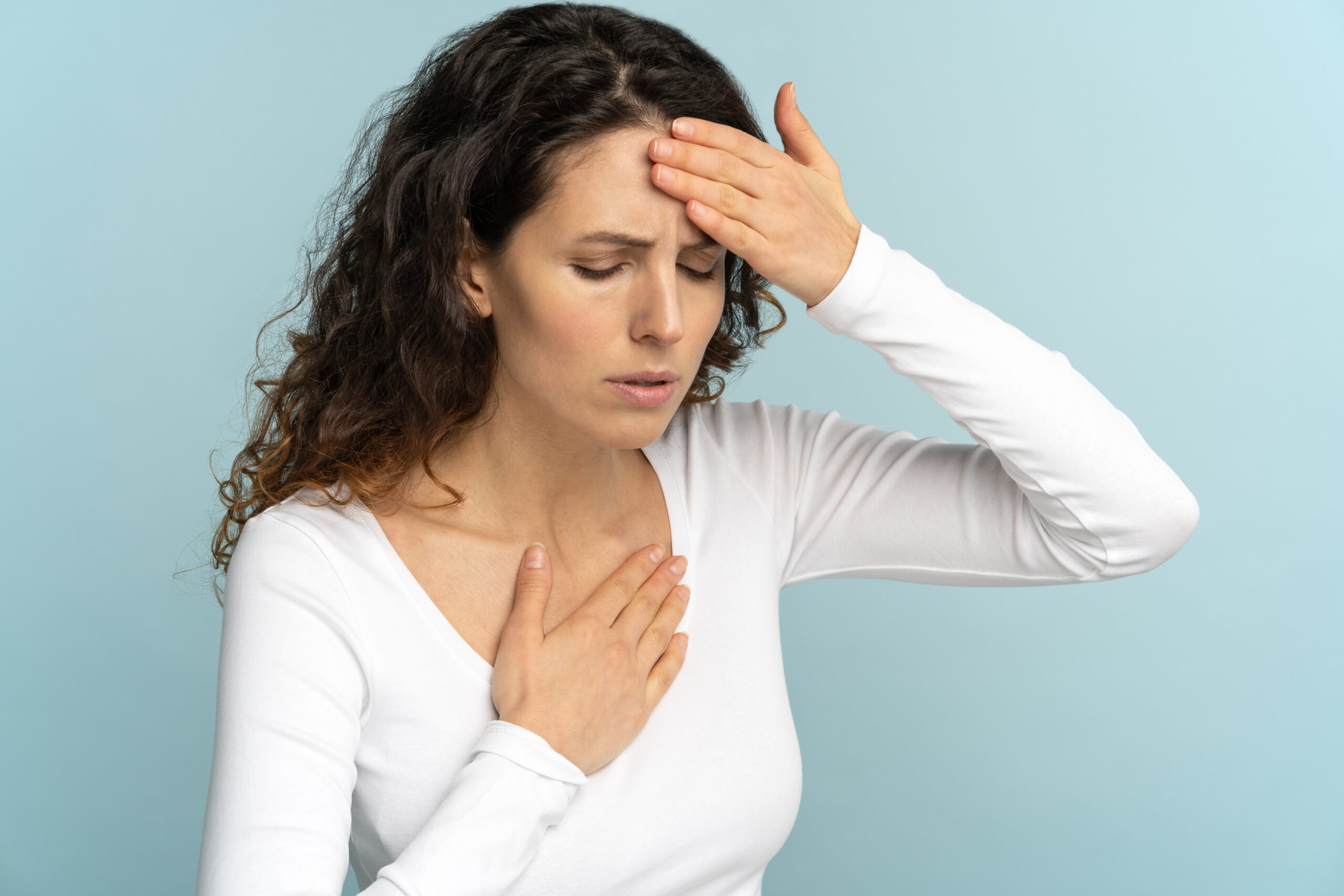
Chest pain, a racing heart, shortness of breath, and similar symptoms can be really scary to experience, especially when you can’t pinpoint what’s causing them. Both heart attacks and panic attacks can manifest similar physical signs, making them easy to confuse.
So, how can you tell the difference between a heart attack vs. panic attack? While both can be traumatic, one is a mental health emergency, while the other can be life-threatening. Let’s take a closer look at each one, including root causes, symptoms, and what to do. .
What is a Panic Attack?
A panic attack feels like a sudden onset of fear, physical discomfort, and often overwhelming anxiety. There may not be an obvious trigger for it, which can make it even more concerning.
During a panic attack, your nervous system is in a fight-or-flight overdrive. This is what causes symptoms like a fast heartbeat, trouble taking deep breaths, shaking, sweating, chest pain, dizziness, or a sense of being out of control.
Usually, panic attacks last anywhere from 10 to 30 minutes, and while they’re scary, they’re not life-threatening.
What is a Heart Attack?
Also known as a myocardial infarction, a heart attack occurs when blood flow to part of your heart muscle is blocked. This is usually the result of plaque buildup in the arteries supplying blood to the heart. Without an adequate supply of oxygen-rich blood, heart tissue becomes damaged and can die.
Similar to a panic attack, a heart attack can cause symptoms of chest pain, lightheadedness, and shortness of breath. But the chest pain often spreads to an arm, the jaw, or the back, accompanied by nausea and sweating.
Heart attacks also do not resolve quickly or on their own; instead, they worsen over time without medical attention. A heart attack requires emergency treatment to restore blood flow to the heart and prevent serious complications or death.
Is It a Panic Attack or a Heart Issue? Key Differences
Unfortunately, some healthcare providers may dismiss women coming in for some of the symptoms described above, chalking it up to anxiety when it’s really a heart attack.
This highlights the importance of being your own health advocate, understanding your body, and demanding care and diagnostic tests if you’re not being offered them. Regardless of what your symptoms end up being, it’s always better to be checked out than not.
If you ever find yourself in a situation where you’re not feeling heard or taken seriously, here are some of the key differences between panic attacks and heart attacks to remember:
- Panic attacks are sudden, they peak within minutes, and they usually resolve without permanent damage.
- Heart attacks can have either a gradual or sudden onset; their symptoms may persist and worsen or resolve on their own, and they require urgent medical care.
Note that while men often experience classic signs of a heart attack, women are more likely to have atypical symptoms. In addition to chest pain, women often report:
- Anxiety
- Shortness of breath
- Nausea, vomiting, upset stomach
- Pain in the shoulder, back, or arm
- Feeling unusually tired or weak
Can a Panic Attack Cause a Heart Attack?
Despite the common saying, “I thought I was going to have a heart attack,” when we’re scared by something, panic attacks do not directly cause heart attacks. However, repeated stress and panic attacks raise blood pressure, increase heart rate, and promote inflammation that can put extra strain on your cardiovascular system.
By keeping anxiety under control through lifestyle strategies and professional support, you can help safeguard both your emotional balance and long-term heart health.
The risk of having a heart attack is also higher among people who have existing heart disease, including factors like high blood pressure and dyslipidemia, such as high triglycerides and non-HDL cholesterol. Having a high lipoprotein A (LpA) is also an indicator of increased cardiovascular risk.
Panic Attack and Heart Attack Testing: What to Expect
If you find yourself at the hospital with concerning chest pain, here’s what you can expect when it comes to a medical workup to get you diagnosed and treated.
An electrocardiogram (ECG) is often the first step. In most cases, panic attack chest pain shows a normal ECG, while a heart attack produces abnormal changes that indicate reduced blood flow or damage to the heart muscle.
Other tests may also be used, such as cardiac enzymes, stress tests to see how your heart responds to exertion, or imaging scans to get a better look at your blood flow.
Data from these tests can help determine whether you’re dealing with a mental health urgency, like a panic attack or if there’s a cardiovascular emergency.
Read more in my blog post about the stress and heart attack connection.
When to Seek Emergency Help
Red flag symptoms of a heart attack include:
- Chest pain or pressure that feels like squeezing, heaviness, or fullness and doesn’t go away with rest.
- Pain that radiates to the arm, shoulder, jaw, neck, or back.
- Shortness of breath, even at rest or with minimal activity.
- Cold sweat, nausea, or vomiting that accompany chest discomfort.
- Lightheadedness, dizziness, or fainting.
- Persistent or worsening symptoms that last more than a few minutes or come and go.
Bottom line? When in doubt, call 911. It’s always better to be safe.
Managing Panic Attacks vs Supporting Heart Health
While panic attacks vs. heart attacks are very different, both deserve proactive care. Panic attacks can often be managed with breathing techniques, mindfulness, therapy, healthy lifestyle changes, and, in some cases, medication prescribed by a healthcare provider.
Supporting your heart health requires a nutritionally balanced and adequate diet, getting regular physical activity, effective stress management, and avoiding harmful habits like smoking and excessive alcohol.
Heart Attack vs Panic Attack FAQs
How can I tell if chest pain is a panic attack or a heart attack?
Panic attack chest pain usually comes on suddenly, peaks within minutes, and may feel sharp or stabbing. A heart attack often causes pressure, heaviness, or squeezing pain that can radiate to the arm, jaw, or back. Because symptoms overlap, it’s always best to seek emergency care if you’re unsure.
Can a panic attack cause a heart attack?
A panic attack itself does not directly cause a heart attack. However, repeated severe stress and anxiety can increase strain on the heart over time, especially in people with existing heart disease. Managing anxiety is important for both mental and cardiovascular health.
Will a panic attack show up on an ECG?
Not usually. A panic attack heart episode often shows a normal ECG, while a heart attack causes abnormal patterns that indicate reduced blood flow or damage. Doctors may also use blood tests or imaging to confirm a diagnosis.
Heart Attack vs Panic Attack: Bottom Line
Panic attacks and heart attacks can feel similar, especially in the moment. However, these are two very different conditions with unique causes, risk factors, and degrees of seriousness. If you’re ever uncertain about symptoms you’re dealing with, seek immediate medical care.
Want to better understand your heart health risk factors and optimize your lifestyle habits? I can help! Explore my 1:1 counseling services or consider participating in my group coaching program. Click here to schedule a complimentary 15-minute discovery call with me.
Sources
- Piano MR, Marcus GM, Aycock DM, et al. Alcohol Use and Cardiovascular Disease: A Scientific Statement From the American Heart Association. Circulation. 2025;152(1):e7-e21. doi:10.1161/CIR.0000000000001341 https://pubmed.ncbi.nlm.nih.gov/40485439/
- Rahman M, Alatiqi M, Al Jarallah M, et al. Cardiovascular Effects of Smoking and Smoking Cessation: A 2024 Update. Glob Heart. 2025;20(1):15. Published 2025 Feb 19. doi:10.5334/gh.1399 https://pmc.ncbi.nlm.nih.gov/articles/PMC11843939/
- Sonaglioni, A., Polymeropoulos, A., Baravelli, M., Nicolosi, G. L., & Lombardo, M. (2025). Diagnostic Accuracy of Exercise Stress Testing, Stress Echocardiography, Myocardial Scintigraphy, and Cardiac Magnetic Resonance for Obstructive Coronary Artery Disease: Systematic Reviews and Meta-Analyses of 104 Studies Published from 1990 to 2025. Journal of Clinical Medicine, 14(17), 6238. https://doi.org/10.3390/jcm14176238
- Patibandla S, Gupta K, Alsayouri K. Cardiac Biomarkers. [Updated 2023 Nov 17]. In: StatPearls [Internet]. Treasure Island (FL): StatPearls Publishing; 2025 Jan-. Available from: https://www.ncbi.nlm.nih.gov/books/NBK545216/
- Frommeyer G, Eckardt L, Breithardt G. Panic attacks and supraventricular tachycardias: the chicken or the egg?. Neth Heart J. 2013;21(2):74-77. doi:10.1007/s12471-012-0350-2 https://pmc.ncbi.nlm.nih.gov/articles/PMC3547429/
- Goldberger A, et al. (2024). Electrocardiogram in the diagnosis of myocardial ischemia and infarction. https://www.nature.com/articles/s41569-024-01024-y
- Vaccarino, V., & Bremner, J. D. (2024). Stress and cardiovascular disease: An update. Nature Reviews Cardiology, 21(9), 603-616. https://doi.org/10.1038/s41569-024-01024-y
- American Heart Association. (2024). Warning Signs of a Heart Attack. https://www.heart.org/en/health-topics/heart-attack/warning-signs-of-a-heart-attack
- Ojha N, Dhamoon AS. Myocardial Infarction. [Updated 2023 Aug 8]. In: StatPearls [Internet]. Treasure Island (FL): StatPearls Publishing; 2025 Jan-. Available from: https://www.ncbi.nlm.nih.gov/books/NBK537076/
- Gerlach J. Psychology Today. (2024). How Long Do Panic Attacks Last? https://www.psychologytoday.com/us/blog/beyond-mental-health/202404/how-long-do-panic-attacks-last?msockid=10a8ad07de9766740ebabb17dfe967e5
- Schmidt NB, Richey JA, Zvolensky MJ, Maner JK. Exploring human freeze responses to a threat stressor. J Behav Ther Exp Psychiatry. 2008;39(3):292-304. doi:10.1016/j.jbtep.2007.08.002 https://pmc.ncbi.nlm.nih.gov/articles/PMC2489204/
- Cackovic C, Nazir S, Marwaha R. Panic Disorder. [Updated 2023 Aug 6]. In: StatPearls [Internet]. Treasure Island (FL): StatPearls Publishing; 2025 Jan-. Available from: https://www.ncbi.nlm.nih.gov/books/NBK430973/