

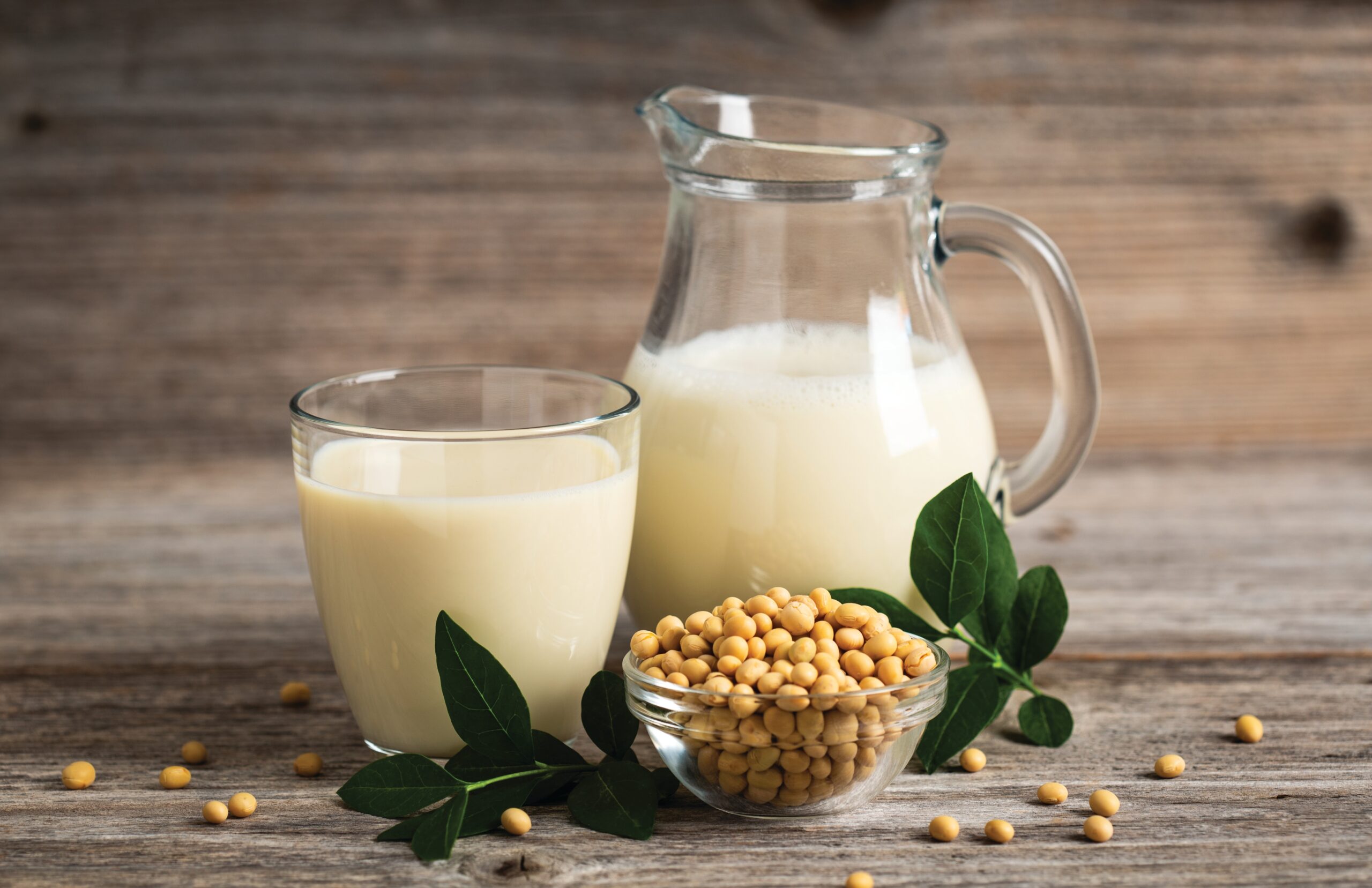
Is soy good or bad for your heart? Let’s look at what science says.
Soybeans, a legume, are used to make a wide range of foods, from minimally processed tofu and tempeh to soy milk and more processed items like soybean oil and soy protein isolate. They’re rich in high-quality protein, fiber, and beneficial nutrients.
Research shows soy protein can lower LDL cholesterol by about 4%, which may translate to a 1-2% reduction in heart disease risk over time. These findings led the FDA, and later other countries, to approve heart-health claims for soy foods.
Beyond cholesterol, soy’s bioactive compounds may also help reduce high blood pressure, making soy a valuable addition to a heart-healthy diet.
Soy and Heart Health: The Research
A growing body of research suggests that soy foods and soy-derived nutrients may contribute to cardiovascular health, although the effects are modest and context-dependent.
Here are some takeaways from key studies on soy and heart health outcomes:
- Several randomized controlled trials show that replacing animal protein with soy protein leads to reductions in LDL cholesterol and total cholesterol levels, generally on the order of 3-5%.
- Population studies suggest that higher intake of soy foods or isoflavones may be associated with lower risk of coronary heart disease or cardiovascular disease events, though results vary by age, sex, menopausal status, and type of soy food.
- Meta-analyses focusing on soy milk or the replacement of cow’s milk with soy milk indicate favorable effects on cardiometabolic risk factors (lipids, blood pressure, inflammation), especially when it replaces higher-saturated-fat dairy.
- Some evidence highlights that effects may be stronger in individuals with elevated baseline risk (e.g., high blood pressure, type 2 diabetes, high LDL) rather than in broadly healthy populations.
Overall, since the effects are modest and some studies have mixed or null results (especially in populations with low baseline risk), soy should be considered one component of a broader heart-healthy diet (like other healthy foods), not a standalone “magic bullet.”
Is Soybean Oil Bad for Your Heart?
The U.S. Food and Drug Administration has recognized soybean oil for its cardiovascular health benefits with a qualified health claim. The language allowed in support of the soybean oil health claim is stronger than the language for others that have similar health claims, stating:
“Supportive but not conclusive scientific evidence suggests that eating about 1½ tablespoons (20.5 grams) daily of soybean oil, which contains unsaturated fat, may reduce the risk of coronary heart disease. To achieve this possible benefit, soybean oil is to replace saturated fat and not increase the total number of calories you eat in a day.”
However, the heart health impact of soybean oil depends heavily on how it’s processed and used. Highly refined soybean oil can be prone to oxidation, a chemical reaction that occurs when unsaturated fats are exposed to heat, light, or air. Oxidized oils can produce harmful compounds that may promote inflammation and damage blood vessels, counteracting potential heart benefits.
To minimize oxidation, choose fresh, high-quality soybean oil, store it in a cool, dark place, and avoid using it for repeated high-heat frying. If you enjoy soybean oil, using moderate amounts of unoxidized, unsaturated oils, alongside a diet rich in whole plant foods, has the most heart-protective benefits.
The Benefits of Soy Milk for Heart Health
Soy milk is a heart-healthy alternative to dairy milk thanks to its low saturated fat content and zero cholesterol. It provides high-quality protein (around 8 grams per cup, similar to dairy milk) and is often fortified with calcium, vitamin D, and B12 for added nutrition (but check the label).
Research shows that replacing full-fat dairy with soy milk may help lower LDL and support healthier blood pressure levels. Plus, soy milk has naturally occurring isoflavones that can help improve blood vessel function, promoting overall cardiovascular health.
Soy Nutritional Content
Soybeans are nutrient-rich and contain many important nutrients that provide heart-healthy benefits, including:
Folate
Folate can protect the heart because it is one of the B vitamins that helps break down homocysteine levels in the body. When folate is not adequately consumed, it can increase homocysteine levels, which are associated with heart disease.
The Daily Value (DV) for folate is 400 µg (mcg) DFE (Dietary Folate Equivalents).
- 1 cup of cooked mature soybeans = 92.9 mcg
- 1 cup of edamame = 482 mcg
- ¼ block of firm tofu = 23.5 mcg of folate
- 1 cup soy milk = 24.3 mcg
- 1 cup of tempeh = 39.8 mcg
- 4-oz soy-based burger = 80.2 mcg
Potassium
Potassium can protect the heart because it helps maintain heartbeat regularity and helps to normalize blood pressure. In one systematic review and meta-analysis of 22 randomized controlled trials and 11 cohort studies, increased potassium lowered the incidence of stroke by 24%.
The DV for potassium is 4,700 mg.
- 1 cup of cooked mature soybeans = 886 mg
- 1 cup of edamame = 676 mg
- 4 oz soy-based burger = 699 mg
- ¼ block of firm tofu = 192 mg
- 1 cup soy milk = 299 mg
- 1 cup of tempeh = 684 mg
Zinc
Because of its antioxidant and anti-inflammatory components, zinc is one of the nutrients that can help mitigate a common mechanism contributing to atherosclerosis. One of the main causes of atherosclerosis, the major cause of heart disease, is oxidative stress because it can lead to blood vessel damage and oxidation of LDL cholesterol.
The DV for zinc is 11 mg. While soy doesn’t contain a significant amount, it can contribute some to your overall diet.
- 1 cup of cooked mature soybeans = 1.98 mg
- ½ cup of black soybeans = 2.25 mg
- 1 cup of edamame = 2.12 mg
- ¼ block of firm tofu = 1.27 mg
- 1 cup of tempeh = 1.89 mg
Magnesium
Magnesium is an essential mineral that is involved in more than 300 enzymatic reactions that help regulate blood pressure, blood sugar control, lipid oxidation, and antioxidant pathways. Magnesium is an important nutrient for cardiovascular health, and magnesium deficiency has been linked to high blood pressure, cardiomyopathy, heartbeat irregularities, atherosclerosis, abnormal lipid values, and diabetes.
The DV for magnesium is 420 mg. Again, while it may not be a magnesium powerhouse, soy does provide some that can contribute to your overall intake.
- ½ cup of black soybeans = 59.8 mg
- 1 cup of edamame = 99.2 mg
- ¼ block of firm tofu = 47 mg
- 1 cup of tempeh = 134 mg
Fiber
Soy foods also contain, in varying amounts based on product, both insoluble and soluble fiber, which is beneficial for heart health. In one systematic review and meta-analysis, higher dietary fiber intakes have been shown to reduce the risk of cardiovascular disease, and lower certain heart disease risk factors such as high blood pressure, cholesterol, and body weight.
When soy foods are digested in the body, the gut ferments fiber and produces short-chain fatty acids like butyrate. Butyrate provides anti-inflammatory, antioxidant, and possibly even protective effects on atherosclerosis by reducing inflammation and oxidative stress, the underlying root causes of the plaque formation process.
Recommended daily fiber needs are 28 grams for women and 35 grams for men.
- 1/2 cup edamame = 4 grams
- 3 oz tempeh = 3-5 grams
- 3 oz firm tofu = 1 gram
- 1 cup unsweetened soy milk = 1 gram
Phytochemicals
Phytochemicals, such as isoflavones and phytosterols, can also play a role in heart health. Soy is a uniquely rich source of isoflavones. Traditional soy foods contain approximately 3.5 mg of isoflavones per gram of protein or between 20-30 mg per serving.
Isoflavones may help lower blood pressure by helping the arteries relax and dilate. Soy isoflavones have been shown to help increase endogenous nitric oxide production, which improves blood flow. In one meta-analysis, daily intake of 65-153 mg of soy isoflavones for 1-12 months significantly decreased blood pressure (on average by 5.94 mmHg systolic and 3.35 mmHg diastolic) in individuals with high blood pressure.
Research shows that soy may help reduce stiffness in the arteries in certain individuals who can metabolize daidzein, a specific isoflavone that is only found in soy foods, into equol. When the body produces equol as a metabolite from soybean production, it has been shown to improve blood vessel function, blood pressure, and arterial stiffness.
Is Soy Bad for Us? Common Concerns Addressed
There’s no doubt that soy is among the most controversial foods there are, with plenty of rumors that dissuade people from eating it. Here’s the truth about some common myths you may have heard about soy:
- Hormones and phytoestrogens: Soy contains isoflavones, plant compounds that can weakly mimic estrogen but act very differently in the body. Studies show they a moderate intake of soy foods does not raise estrogen levels in men or women and does not cause feminizing effects like gynecomastia (enlarged breast tissue in men).
- Cancer risk: Contrary to popular belief, soy foods are linked to a lower risk of breast and prostate cancer, not higher. Some studies also show soy intake is associated with a higher survival rate and reduced recurrence rate among those already diagnosed. Isoflavones may protect cells from DNA damage and regulate hormone activity in ways that reduce cancer risk.
- Thyroid health: For people with normal thyroid function and adequate iodine intake, soy does not impair thyroid activity. Those on thyroid medication may simply need to take their medicine and soy foods at different times of day for optimal absorption, but the evidence behind this is minimal. Furthermore, cooking soy foods can help destroy compounds that may interfere with thyroid function.
- Heart health: Numerous studies show that soy protein can help lower LDL cholesterol, improve blood vessel function, and modestly reduce heart disease risk, especially when it replaces animal protein or saturated fats.
The best way to reap soy benefits is to choose whole and minimally processed options, and opt for USDA organic whenever possible, to reduce your intake of agricultural pollutants.
How to Eat More Soy Foods
Incorporating soy into your diet is simple and delicious. Here are some practical ways to enjoy heart-healthy soy foods:
- Tofu: Use firm tofu in stir-fries, soups, or on the grill. For a crispy texture, press out excess water before cooking and season generously.
- Tempeh: Slice and marinate before pan-searing or baking. Its nutty flavor pairs well with Asian sauces, tacos, or salads.
- Edamame: Enjoy steamed edamame pods as a snack or toss shelled edamame into grain bowls, pasta, or salads for extra protein and fiber.
- Soy milk: Pour over cereal, blend into smoothies, or use in coffee as a creamy, cholesterol-free alternative to dairy milk.
These easy swaps can help you add more protein, fiber, and heart-protective nutrients to your daily meals.
Soy and Heart Health FAQs
Can soy lower cholesterol?
Yes, studies show that soy protein may help reduce LDL cholesterol and total cholesterol, especially when it replaces animal protein. This effect can support overall heart health.
Is soy milk better than dairy milk for heart health?
Soy milk has no cholesterol, is lower in saturated fat than dairy milk, and may help improve cholesterol levels. Many varieties are fortified with calcium and vitamin D, making it a heart-friendly alternative.
How much soy is safe to eat daily?
Most research supports moderate soy intake, around about 1-2 servings per day (such as soy milk, tofu, or edamame), as safe and likely beneficial for heart health.
Soy and Your Heart: The Bottom Line
Soy foods are a good source of protein and may provide cardiovascular benefits from their rich vitamin and mineral content, to their dietary fiber and phytochemical makeup. Including edamame, tofu, tempeh, soymilk, and other soy foods in your diet is a great way to reap these benefits and contribute to a heart-healthy diet. If you don’t like soy, however, don’t worry. We can work together to personalize your diet and ensure you’re getting these nutrients from other foods. Click here to learn about my 1:1 nutrition services.
It is important to focus on what you are eating to support optimal heart health. To learn more about heart disease prevention through science-based nutrition, sign up for my email list here, and follow me on social media at heart.health.nutritionist.
Sources
- Hügel HM, Jackson N, May B, Zhang AL, Xue CC. Polyphenol protection and treatment of hypertension. Phytomedicine. 2016;23(2):220-231. doi:10.1016/j.phymed.2015.12.012 https://pubmed.ncbi.nlm.nih.gov/26926184/
- Liu XX, Li SH, Chen JZ, et al. Effect of soy isoflavones on blood pressure: a meta-analysis of randomized controlled trials. Nutr Metab Cardiovasc Dis. 2012;22(6):463-470. doi:10.1016/j.numecd.2010.09.006 https://pubmed.ncbi.nlm.nih.gov/21310599/
- Amiri, P., Hosseini, S. A., Ghaffari, S., Tutunchi, H., Ghaffari, S., Mosharkesh, E., Asghari, S., & Roshanravan, N. (2022). Role of Butyrate, a Gut Microbiota Derived Metabolite, in Cardiovascular Diseases: A comprehensive narrative review. Frontiers in Pharmacology, 12, 837509. https://doi.org/10.3389/fphar.2021.837509
- Reynolds, A.N., Akerman, A., Kumar, S. et al. Dietary fibre in hypertension and cardiovascular disease management: systematic review and meta-analyses. BMC Med 20, 139 (2022). https://doi.org/10.1186/s12916-022-02328-x
- DiNicolantonio JJ, Liu J, O’Keefe JH. Magnesium for the prevention and treatment of cardiovascular disease. Open Heart. 2018;5(2):e000775. Published 2018 Jul 1. doi:10.1136/openhrt-2018-000775 https://pmc.ncbi.nlm.nih.gov/articles/PMC6045762/
- Aburto NJ, Hanson S, Gutierrez H, Hooper L, Elliott P, Cappuccio FP. Effect of increased potassium intake on cardiovascular risk factors and disease: systematic review and meta-analyses. BMJ. 2013;346:f1378. Published 2013 Apr 3. doi:10.1136/bmj.f1378 https://pmc.ncbi.nlm.nih.gov/articles/PMC4816263/
- Carmel R, et al. Update on Cobalamin, Folate, and Homocysteine. https://ashpublications.org/hematology/article/2003/1/62/18657/Update-on-Cobalamin-Folate-and-Homocysteine
- Erlich MN, Ghidanac D, Blanco Mejia S, et al. A systematic review and meta-analysis of randomized trials of substituting soymilk for cow’s milk and intermediate cardiometabolic outcomes: understanding the impact of dairy alternatives in the transition to plant-based diets on cardiometabolic health. BMC Med. 2024;22(1):336. Published 2024 Aug 22. doi:10.1186/s12916-024-03524-7 https://pubmed.ncbi.nlm.nih.gov/39169353/
- Asbaghi O, Ashtary-Larky D, Mousa A, Rezaei Kelishadi M, Moosavian SP. The Effects of Soy Products on Cardiovascular Risk Factors in Patients with Type 2 Diabetes: A Systematic Review and Meta-analysis of Clinical Trials. Adv Nutr. 2022;13(2):455-473. doi:10.1093/advances/nmab121 https://pmc.ncbi.nlm.nih.gov/articles/PMC8970819/
- Erlich MN, Ghidanac D, Blanco Mejia S, et al. A systematic review and meta-analysis of randomized trials of substituting soymilk for cow’s milk and intermediate cardiometabolic outcomes: understanding the impact of dairy alternatives in the transition to plant-based diets on cardiometabolic health. BMC Med. 2024;22(1):336. Published 2024 Aug 22. doi:10.1186/s12916-024-03524-7 https://pubmed.ncbi.nlm.nih.gov/39169353/
- Ma L, et al. Isoflavone Intake and the Risk of Coronary Heart Disease in US Men and Women: Results From 3 Prospective Cohort Studies. Circulation, 141(14). https://doi.org/10.1161/CIRCULATIONAHA.119.041306
- Im, J., & Park, K. (2021). Association between Soy Food and Dietary Soy Isoflavone Intake and the Risk of Cardiovascular Disease in Women: A Prospective Cohort Study in Korea. Nutrients, 13(5), 1407. https://doi.org/10.3390/nu13051407
- Yan Z, Zhang X, Li C, Jiao S, Dong W. Association between consumption of soy and risk of cardiovascular disease: A meta-analysis of observational studies. Eur J Prev Cardiol. 2017;24(7):735-747. doi:10.1177/2047487316686441 https://pubmed.ncbi.nlm.nih.gov/28067550/
- Erdman J. Soy Protein and Cardiovascular Disease: A Statement for Healthcare Professionals From the Nutrition Committee of the AHA. Circulation, 102(20). https://doi.org/10.1161/01.CIR.102.20.2555
- Blanco Mejia S, Messina M, Li SS, et al. A Meta-Analysis of 46 Studies Identified by the FDA Demonstrates that Soy Protein Decreases Circulating LDL and Total Cholesterol Concentrations in Adults. J Nutr. 2019;149(6):968-981. doi:10.1093/jn/nxz020 https://pmc.ncbi.nlm.nih.gov/articles/PMC6543199/
- Otun, J., Sahebkar, A., Östlundh, L., Atkin, S. L., & Sathyapalan, T. (2019). Systematic Review and Meta-analysis on the Effect of Soy on Thyroid Function. Scientific Reports, 9, 3964. https://doi.org/10.1038/s41598-019-40647-x
- Nechuta SJ, Caan BJ, Chen WY, et al. Soy food intake after diagnosis of breast cancer and survival: an in-depth analysis of combined evidence from cohort studies of US and Chinese women. Am J Clin Nutr. 2012;96(1):123-132. doi:10.3945/ajcn.112.035972 https://pubmed.ncbi.nlm.nih.gov/22648714/
- Applegate CC, Rowles JL, Ranard KM, Jeon S, Erdman JW. Soy Consumption and the Risk of Prostate Cancer: An Updated Systematic Review and Meta-Analysis. Nutrients. 2018;10(1):40. Published 2018 Jan 4. doi:10.3390/nu10010040 https://pmc.ncbi.nlm.nih.gov/articles/PMC5793268/
- Boutas I, Kontogeorgi A, Dimitrakakis C, Kalantaridou SN. Soy Isoflavones and Breast Cancer Risk: A Meta-analysis. In Vivo. 2022;36(2):556-562. doi:10.21873/invivo.12737 https://pubmed.ncbi.nlm.nih.gov/35241506/
- Reed KE, Camargo J, Hamilton-Reeves J, Kurzer M, Messina M. Neither soy nor isoflavone intake affects male reproductive hormones: An expanded and updated meta-analysis of clinical studies. Reprod Toxicol. 2021;100:60-67. doi:10.1016/j.reprotox.2020.12.019 https://pubmed.ncbi.nlm.nih.gov/33383165/
- Messina, M. (2016). Soy and Health Update: Evaluation of the Clinical and Epidemiologic Literature. Nutrients, 8(12), 754. https://doi.org/10.3390/nu8120754
- Wang, X., Yu, C., Lv, J. et al. Consumption of soy products and cardiovascular mortality in people with and without cardiovascular disease: a prospective cohort study of 0.5 million individuals. Eur J Nutr 60, 4429–4438 (2021). https://doi.org/10.1007/s00394-021-02602-3
- Taku K, Umegaki K, Sato Y, Taki Y, Endoh K, Watanabe S. Soy isoflavones lower serum total and LDL cholesterol in humans: a meta-analysis of 11 randomized controlled trials. Am J Clin Nutr. 2007 Apr;85(4):1148-56. doi: 10.1093/ajcn/85.4.1148. Erratum in: Am J Clin Nutr. 2007 Sep;86(3):809. PMID: 17413118. https://pubmed.ncbi.nlm.nih.gov/17413118/
- Gatta E, Maltese V, Cavadini M, Anelli V, Bambini F, Buoso C, Facondo P, Pirola I, Delbarba A, Cappelli C. Interference or Noninterference Between Soy and Levothyroxine: That Is the Question. A Narrative Review of Literature. Endocr Pract. 2023 Nov;29(11):897-901. doi: 10.1016/j.eprac.2023.08.009. Epub 2023 Aug 24. PMID: 37633413. https://pubmed.ncbi.nlm.nih.gov/37633413/
- Panduang T, Phucharoenrak P, Karnpanit W, Trachootham D. Cooking Methods for Preserving Isothiocyanates and Reducing Goitrin in Brassica Vegetables. Foods. 2023 Oct 2;12(19):3647. doi: 10.3390/foods12193647. PMID: 37835300; PMCID: PMC10573036. https://pmc.ncbi.nlm.nih.gov/articles/PMC10573036/